What Are the TSA Liquid Rules, Exactly?
The TSA liquid rules have been confusing travelers since 2006. And honestly? They haven't gotten much simpler in 2026.
The core rule is called 3-1-1, and it governs every liquid, gel, aerosol, cream, and paste you try to bring through a U.S. airport security checkpoint. Miss a detail and you'll watch a TSA officer toss your favorite sunscreen into a bin.
Here's everything you need to know about what you can and can't bring — plus the 2026 updates that are quietly changing the game at select airports.
The 3-1-1 Rule: A Quick Refresher
The name says it all — three numbers, three rules:
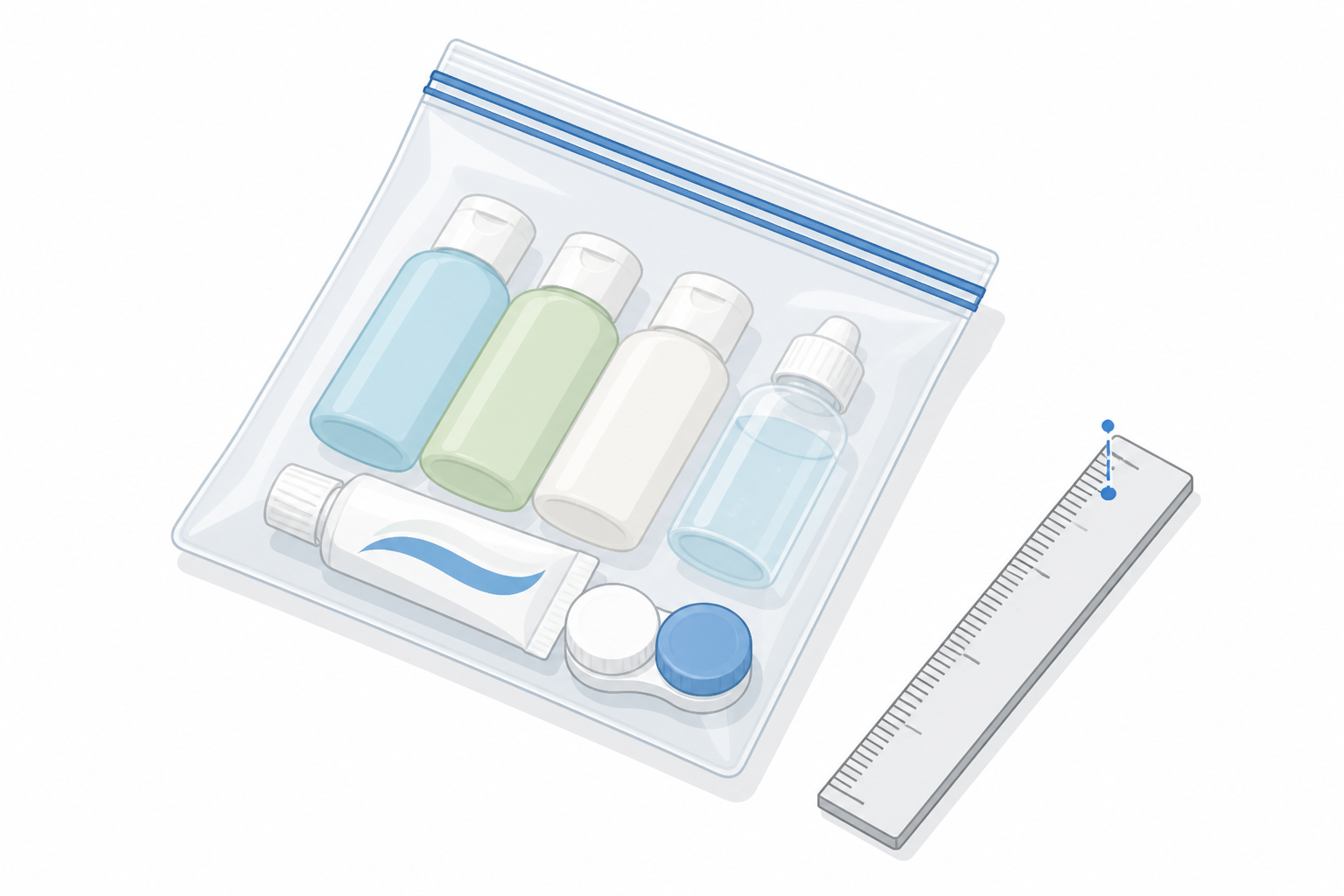
- 3.4 ounces (100 ml): Each individual container of liquid, gel, aerosol, cream, or paste must be 3.4 ounces or smaller.
- 1 quart-sized bag: All those containers must fit inside a single clear, resealable, quart-sized plastic bag.
- 1 bag per passenger: You get one bag. That's it. Not one per carry-on — one per person.
It doesn't matter if your 6-ounce bottle is only half full. TSA looks at the container size, not how much liquid is actually inside. A half-empty 8-ounce bottle gets tossed every single time.
What Counts as a "Liquid" Under TSA Rules?
This is where most people get tripped up. TSA defines a liquid as anything that can be poured, pumped, squeezed, or spread. If it doesn't hold a completely solid form at room temperature, it falls under the 3-1-1 rule.
That means a lot of things you wouldn't normally think of as "liquid" absolutely count.
The Obvious Stuff
Shampoo, conditioner, body wash, mouthwash, contact lens solution, perfume, and any bottled beverage. No surprises there.
The Not-So-Obvious Stuff
Toothpaste. Deodorant gel. Mascara. Lip gloss. Sunscreen. Peanut butter. Hummus. Yogurt. Jam. Wet-consistency cheese spreads. Yes, really.
If you're standing in line wondering whether something counts, it probably does. When in doubt, check the TSA's "What Can I Bring?" tool at tsa.gov before you pack.
| Category |
Examples |
Subject to 3-1-1? |
| Liquids |
Shampoo, mouthwash, contact solution, perfume |
Yes |
| Gels |
Hair gel, toothpaste, hand sanitizer, aloe vera |
Yes |
| Aerosols |
Hairspray, dry shampoo spray, shaving cream |
Yes |
| Creams & Lotions |
Moisturizer, sunscreen, foundation, hand cream |
Yes |
| Pastes |
Toothpaste, thick ointments, lip balm (in pots) |
Yes |
| Solid Items |
Stick deodorant, bar soap, solid perfume, powder makeup |
No |
| Food Spreads |
Peanut butter, hummus, yogurt, jam, cream cheese |
Yes |
Planning a trip and want to skip the packing stress? Book with Autopilot and we'll help you get from booking to boarding without the headaches.
Exceptions to the 3-1-1 Rule
Not everything has to squeeze into that quart bag. TSA carves out specific exceptions for medically necessary items and infant supplies — and these apply at every U.S. airport, regardless of scanner technology.
Baby Formula, Breast Milk, and Toddler Food
Formula, breast milk, toddler drinks, and baby food (including puree pouches) are allowed in quantities greater than 3.4 ounces. They don't need to fit in your quart bag.
A few key details most people miss: You don't need to be traveling with your child to bring breast milk. Ice packs, freezer packs, and gel packs to keep formula and breast milk cold are also allowed. And TSA recommends using clear, translucent bottles rather than opaque pouches to speed up screening.
Just make sure you tell the TSA officer at the start of the screening process. Remove these items from your carry-on so they can be screened separately.
Medications
Prescription and over-the-counter liquid medications are exempt from the 3.4-ounce limit. Bring them in their original packaging, in reasonable quantities for your trip, and keep them accessible in your bag for inspection.
There's no hard cap on the amount — "reasonable quantity" is the standard. A two-week supply of insulin? Fine. A gallon jug of cough syrup? You're going to have a conversation with a TSA officer.
Hand Sanitizer
This exception stuck around from the pandemic era. You can bring hand sanitizer containers up to 12 ounces through security. That's more than triple the standard limit.
What Changed in 2026: CT Scanners and the Future of Liquid Rules
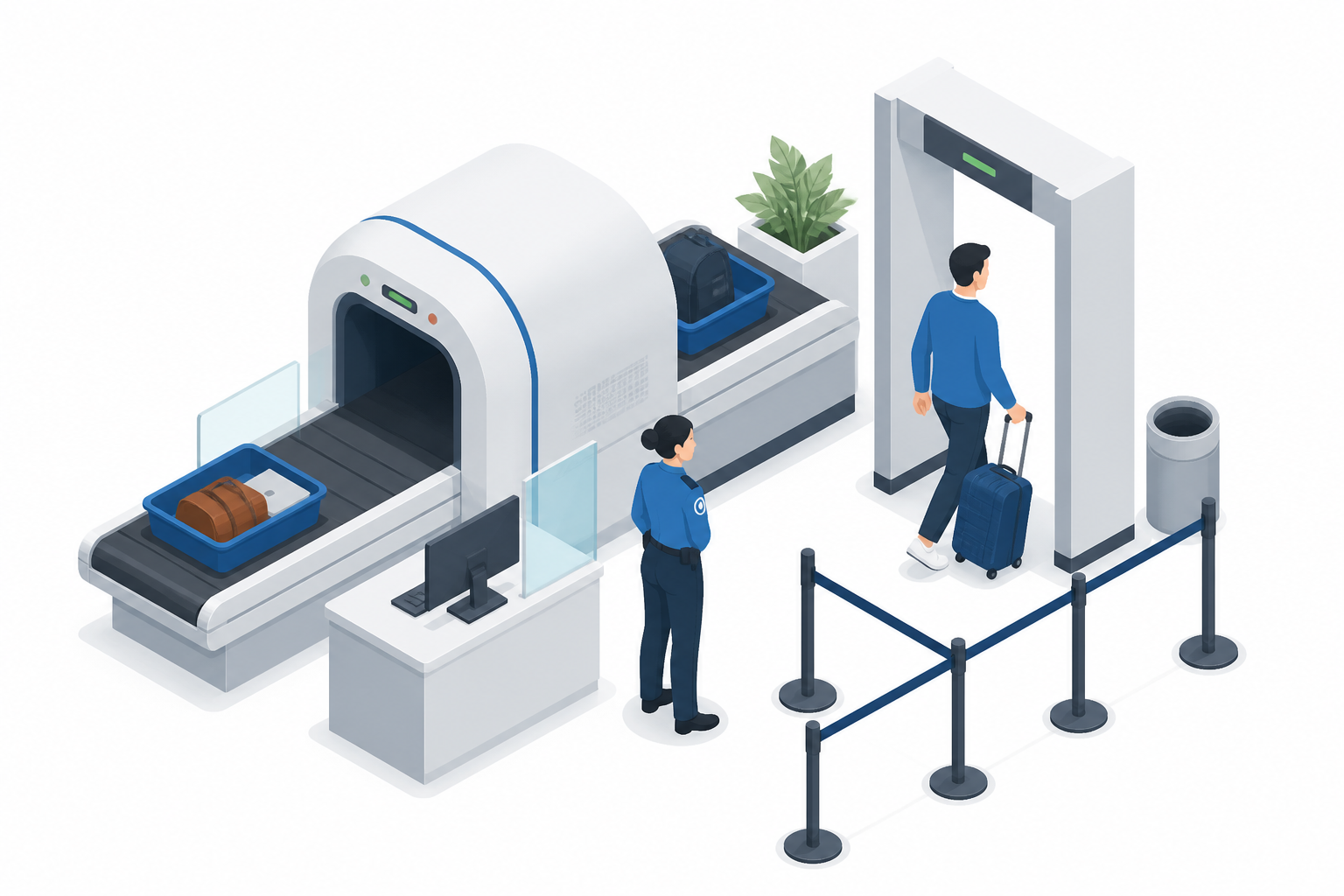
Here's where it gets interesting. TSA has been quietly rolling out computed tomography (CT) scanners at major airports since 2023. By early 2026, the vast majority of checkpoints at big hubs like ATL, LAX, JFK, ORD, and DFW have them.
These scanners create detailed 3D images of your bag's contents — a massive upgrade from the flat 2D X-rays of the past. The practical effect? At CT-equipped checkpoints, you often don't need to remove your liquids bag or laptop from your carry-on at all.
What This Means for You
The screening process is faster and less annoying. But here's the critical part: the 3-1-1 rule itself hasn't changed. You still need to pack liquids in 3.4-ounce containers inside a quart bag. The CT scanners just mean you might not have to pull that bag out at security.
TSA has also expanded its list of exempt items at CT-equipped checkpoints to include 11 specific categories: baby formula and breast milk in any quantity, liquid medications with documentation, hand sanitizer up to 12 ounces, contact lens solution, and other medical necessities.
The Catch
Not every checkpoint at a major airport has CT scanners. Even at JFK or LAX, some lanes still use traditional X-ray machines. And at smaller regional airports? Expect the old-school 3-1-1 enforcement across the board.
The safest approach: assume 3-1-1 applies unless you see signage explicitly telling you otherwise.
TSA PreCheck and Liquid Rules
TSA PreCheck is a game-changer for a lot of reasons — shoes stay on, laptops stay in bags, the line moves faster. But does it change the liquid rules?
Sort of. If your PreCheck lane uses a CT scanner (and most do at major airports), you typically won't need to pull your liquids bag out for separate screening. The scanner handles it.
But the 3.4-ounce container limit and the quart-bag requirement still apply. PreCheck doesn't give you permission to bring a full-size shampoo bottle. It just makes the screening process smoother when you've packed correctly.
If you're flying through a smaller airport where PreCheck lanes use traditional X-ray machines, you'll still need to remove your liquids bag.
Duty-Free Liquids and Connecting Flights
Bought a bottle of wine at the duty-free shop in Paris? Here's where it gets complicated.
You can bring duty-free liquids through U.S. security checkpoints on connecting flights — but only if all of these conditions are met:
- You purchased the item at an international duty-free shop
- The item is sealed in a tamper-evident bag by the retailer
- You have the original receipt
- The purchase was made within 48 hours
- The bag shows no signs of tampering
If any of those conditions aren't met, the item gets confiscated. TSA's own recommendation? Pack duty-free liquids in your checked bag if you have a connecting flight. It's just easier.
How Liquid Rules Differ Internationally
If you're flying internationally, the rules can change depending on the airport you're departing from. Here's the current state of play.
European Union
The EU has been ahead of the U.S. on this one. Thanks to the same CT scanner technology, a growing number of European airports have scrapped the 100ml limit entirely, allowing containers up to 2 liters.
| Status |
Airports / Countries |
| Limit Removed (up to 2L) |
London Heathrow, Gatwick, Stansted, Luton, Edinburgh, Birmingham; Munich, Frankfurt, Berlin (some checkpoints); Rome Fiumicino, Milan Linate, Bologna; Dublin, Prague T2, Malta, Billund |
| 100ml Still Enforced |
Paris (all airports), Amsterdam Schiphol, Madrid, Barcelona, Athens, Lisbon, Brussels |
The situation is a patchwork. You might breeze through London Heathrow with a full-size bottle of shampoo, then have it confiscated on a connection through Paris CDG. Always check the rules for your specific departure airport.
Asia and the Middle East
Most major Asian and Middle Eastern airports still enforce the 100ml standard. Singapore Changi, Tokyo Narita, Dubai International, Hong Kong — all stick to the traditional limit. Don't assume otherwise.
Pro Tips for Packing Liquids Like a Frequent Flyer
After hundreds of flights, here's what actually works:
- Buy travel containers, not travel-size products. Refillable silicone tubes are cheaper in the long run and let you bring your preferred brands.
- Invest in solid alternatives. Solid shampoo bars, solid deodorant, bar soap, and solid perfume all bypass the 3-1-1 rule entirely.
- Pre-pack a permanent toiletry bag. Keep a quart bag with your travel essentials always ready to grab. Restocking between trips takes 30 seconds.
- Put the quart bag on top. Even at CT-scanner airports, having your liquids accessible speeds things up if TSA asks for a secondary screening.
- Check container sizes before packing. The label says 3 oz? Great, that's under 3.4. The label says 4 oz? Doesn't matter if it's half empty — it's getting tossed.
- Ship toiletries to your hotel for long trips. Staying somewhere for a week? It's often easier to mail a box ahead than to stress about what fits in a quart bag.
Spending more time on packing rules than on planning your actual trip? Let Autopilot handle the booking details so you can focus on the fun parts of travel.
Checked Bags: A Different Story
Everything above applies to carry-on bags. Checked luggage is far more permissive.
You can pack full-size liquids in checked bags with very few restrictions. There's no 3.4-ounce limit and no quart-bag requirement. The main limitations: individual containers of toiletry-type items can't exceed 18 ounces (500ml), and the total aggregate of all toiletry-type liquids per passenger can't exceed 68 ounces (2 liters).
Alcohol in checked bags has its own rules: nothing over 140 proof (70% ABV), and alcohol between 48-140 proof is limited to 5 liters total per passenger. Beer and wine under 48 proof have no quantity limit.
Frequently Asked Questions
How many ounces can you bring on a plane in carry-on?
Each individual container must be 3.4 ounces (100ml) or smaller. All containers must fit in a single quart-sized clear plastic bag. There's no maximum number of containers — if they fit in the quart bag, you're good.
Can I bring a water bottle through TSA?
You can bring an empty water bottle through security and fill it at a water fountain on the other side. A full water bottle will be confiscated. This applies regardless of the bottle size or material.
Does toothpaste count as a liquid for TSA?
Yes. Toothpaste is classified as a paste and falls under the 3-1-1 rule. Standard toothpaste tubes are usually 3-6 ounces, so you'll need a travel-sized tube (3.4 oz or smaller) for your carry-on.
Do I still need to take liquids out of my bag at security?
At checkpoints with CT scanners — now common at most major U.S. airports — you can typically leave your liquids bag inside your carry-on. At checkpoints with traditional X-ray machines, you still need to remove the quart bag and place it in a bin. When in doubt, look for signage or follow the instructions of the TSA officer.
Are medications exempt from the TSA liquid rules?
Yes. Both prescription and over-the-counter liquid medications are exempt from the 3.4-ounce limit. Keep them in their original packaging, bring reasonable quantities for your trip, and declare them to the TSA officer at the checkpoint. No doctor's note is required for prescriptions, but having the original pharmacy label helps.
Can I bring makeup in my carry-on?
Solid makeup (pressed powder, stick lipstick, solid concealer) is fine with no restrictions. Liquid or cream-based makeup (foundation, liquid lipstick, mascara, concealer in a tube) must follow the 3-1-1 rule. Each item needs to be 3.4 ounces or smaller and fit in your quart bag.
What happens if TSA finds a liquid over 3.4 ounces in my carry-on?
They'll ask you to either discard the item at the checkpoint or go back to the check-in counter and put it in a checked bag (if you have time and a checked bag). There's no fine or penalty for an honest mistake — but the item is gone if you can't check it.
Are the liquid rules different in Europe?
As of 2026, a growing number of European airports with CT scanners have relaxed or eliminated the 100ml limit, allowing containers up to 2 liters. However, many major airports — including Paris, Amsterdam, Madrid, and Barcelona — still enforce the 100ml rule. Always check the rules for your specific departure airport before packing.
Ready to book your next trip without the hassle? Try Autopilot — we make flight booking effortless so you can spend your energy on more important decisions. Like whether to pack the hummus.
Disclaimer: TSA rules and airport security procedures can change without notice. The information in this article is accurate as of May 2026, but we always recommend checking tsa.gov or your airline's website for the most current guidelines before you fly. This article is for informational purposes only and does not constitute official TSA guidance.


