

How to Fly Standby in 2026: The Complete Guide to Standby Flights
Learn how to fly standby on every major U.S. airline in 2026. Free standby policies, fees by airline, standby vs same-day change, and 7 tips to get cleared.

Learn how to fly standby on every major U.S. airline in 2026. Free standby policies, fees by airline, standby vs same-day change, and 7 tips to get cleared.
You're sitting at the gate, watching the clock tick toward a flight that doesn't leave for another four hours. Meanwhile, an earlier flight to your exact destination is boarding right now — with empty seats.
That's the standby opportunity most travelers don't know exists.
Flying standby lets you grab a seat on an earlier flight without buying a whole new ticket. It's one of the best flexibility hacks in air travel, and in many cases, it's completely free.
But the rules vary wildly by airline. Some carriers hand out standby like candy. Others charge you $75 for the privilege.
Here's everything you need to know about standby flights in 2026, broken down by airline, fare class, and strategy.
When you fly standby, you're asking to be placed on a waitlist for a different flight than the one you originally booked. If there's an open seat after all confirmed passengers have boarded, you get on. If not, you stay on your original flight.
Your original booking stays intact the entire time. Think of it as a free option with zero downside — you either get the earlier flight or you don't, but you never lose your confirmed seat.
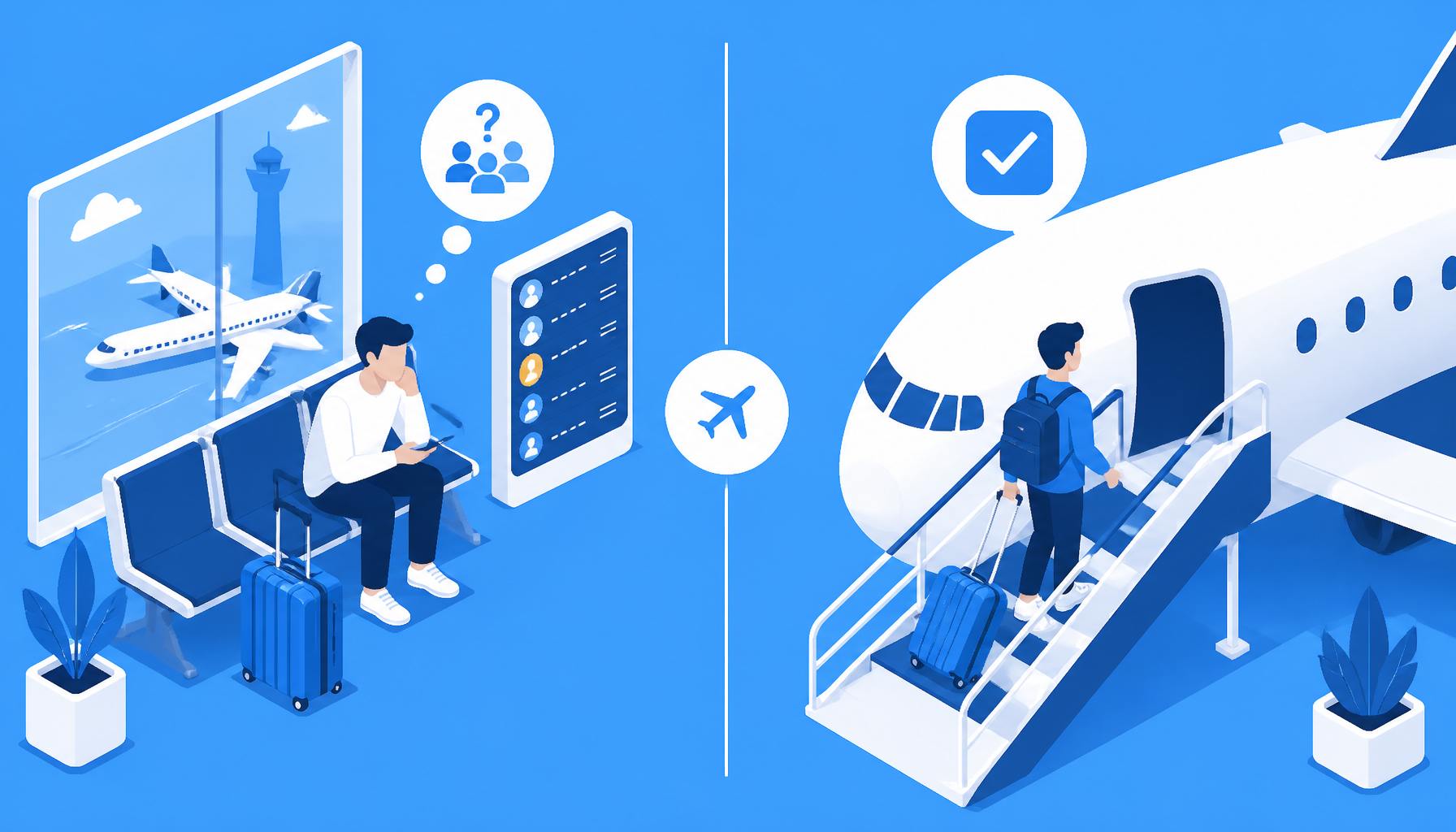
There are two very different flavors of standby you'll encounter:
This guide focuses primarily on same-day standby — the kind available to anyone with a ticket.
This is the single most important distinction in standby flying, and most travelers get it wrong.
Same-day standby puts you on a waitlist. You might get on, you might not. It's typically free.
Same-day confirmed change guarantees you a seat on the new flight. It usually costs $75 (or is free for elite members). Your original booking is canceled and replaced.
| Feature | Same-Day Standby | Same-Day Confirmed Change |
|---|---|---|
| Seat guaranteed? | No — waitlist only | Yes — confirmed seat |
| Cost | Usually free | $25–$75 (free for elites) |
| Original flight | Stays as backup | Canceled and replaced |
| Direction | Earlier flights only (most airlines) | Earlier or later flights |
| Basic Economy eligible? | Sometimes (varies by airline) | Rarely |
| Best for | Flexible travelers with time to wait | Must-make-it situations |
The bottom line: if you absolutely need to be on that other flight, pay for the confirmed change. If you're flexible and willing to gamble, standby is the move.
Speaking of flexibility — Autopilot monitors your flight prices after you book and automatically gets you money back when fares drop. It's one less thing to worry about while you're playing the standby game.
Here's where it gets complicated. Every airline handles standby differently, and the rules have shifted considerably over the past few years. This table covers every major U.S. carrier still operating.
| Airline | Same-Day Standby Fee | Same-Day Confirmed Change Fee | Basic Economy Eligible? | Elite Fee Waiver |
|---|---|---|---|---|
| Delta | Free | $75 | Standby: Yes / Confirmed: No | All Medallion tiers: free confirmed change |
| United | Free | $75 | Standby: Yes / Confirmed: No | All MileagePlus elites: free confirmed change |
| American | Free | No change fee (pay fare difference) | Standby: Yes / Confirmed: No | All AAdvantage elites: no fare difference |
| Southwest | Free (Choice fares & above) | Free (pay fare difference on Basic) | A-List only on Basic | A-List / A-List Preferred: free on all fares |
| JetBlue | $75 | $75 | No (Blue Basic excluded) | Mosaic: free / Blue Extra: free |
| Alaska | Free | $50 (varies by route) | No (Saver fares excluded) | MVP Gold / 75K: free confirmed change |
| Frontier | Free (Classic Plus fares only) | Not widely available | No (Economy fares excluded) | Ascent / Summit elites eligible |
A few things jump out from this table.
Delta and United are the most generous with standby — it's free for everyone, including Basic Economy. American is similar but takes a slightly different approach by eliminating change fees entirely and just charging the fare difference.
JetBlue is the outlier. It's the only major carrier that charges $75 just for same-day standby (not a confirmed change — standby). If you're a JetBlue flyer, that Mosaic status or Blue Extra fare really pays for itself here.
And yes, Spirit Airlines is notably absent. The carrier ceased all operations on May 2, 2026, so its standby policies are now a footnote in aviation history.
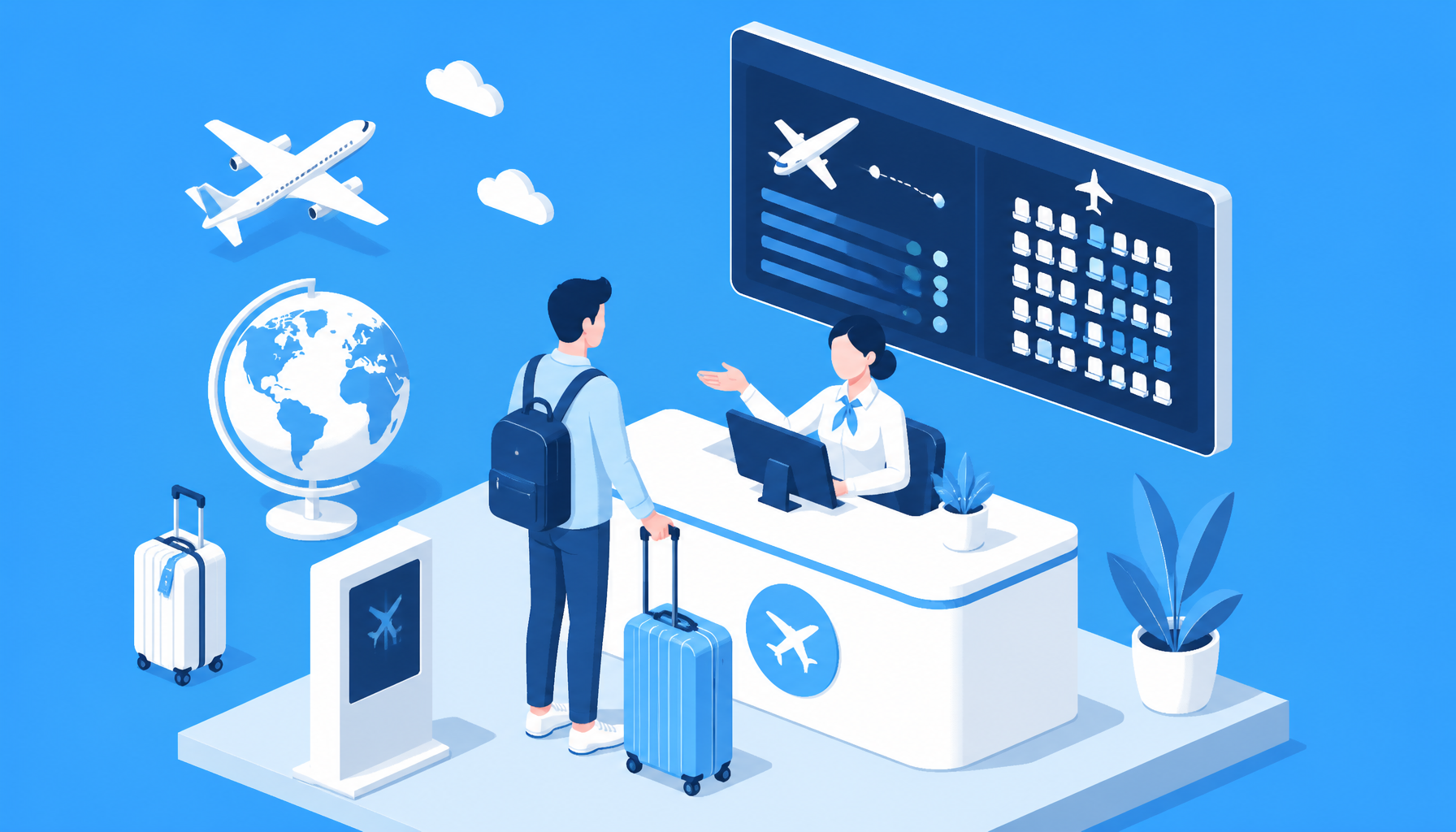
The process is more straightforward than most people think. Here's the step-by-step.
Before anything else, verify that your fare class qualifies for standby. Basic Economy on most airlines allows standby, but Frontier's Economy fares and JetBlue's Blue Basic do not. Check your booking confirmation or the airline's app.
You can typically add yourself to the standby list through three channels:
Get to the gate for your desired flight early. Make your presence known to the gate agent — a quick, polite check-in goes a long way. Don't be the person who listed for standby from the airport lounge and missed the boarding call.
Standby passengers are typically cleared in the final minutes before departure, after all confirmed passengers have boarded. If your name is called, you're on. If not, head to your original gate.
Let's clear this up: flying standby in 2026 is not really about saving money on the ticket itself. You already have a ticket. Standby is about flexibility — getting to your destination sooner without paying for a whole new booking.
That said, there are real cost benefits:
The one scenario where standby gets truly expensive is JetBlue's $75 charge. If you're paying that, you might as well spring for the confirmed change at the same price.
Want to actually save money on flights? Autopilot tracks your booked flights and automatically claims refunds when prices drop. No standby gamble required.
Here's where the rules tighten up significantly.
Most U.S. airlines restrict same-day standby to domestic routes — flights within the U.S., Puerto Rico, Canada, and the U.S. Virgin Islands. International long-haul flights are generally excluded.
United is the most flexible, allowing standby on some international routes, but the check-in cutoff is 60 minutes (vs. 45 domestic) and your luggage needs to be transferable in time.
Bottom line: for international flexibility, spring for a same-day confirmed change or a flexible fare class. Don't count on standby for that transatlantic flight.
You've probably heard about airline employees jetting off to Paris on a whim. That's non-revenue (non-rev) standby — completely different from what regular passengers use.
Non-rev travelers are airline employees, retirees, and their eligible family members flying on a space-available basis. They board last — after every paying passenger, including same-day standby travelers. Priority is determined by seniority, employee class, and check-in time.
Unless you work for an airline, non-rev isn't available to you. But it's worth knowing about because non-rev travelers are sometimes competing for the same last few seats you're eyeing on same-day standby.
These are the strategies that actually move the needle.
And while you're optimizing your travel strategy — let Autopilot handle the price-monitoring side. Book your flight, and Autopilot automatically watches for price drops and gets you the difference back.
When you fly standby, you request to be placed on a waitlist for a different flight (usually earlier) than your confirmed booking. If seats remain after all confirmed passengers board, standby passengers are cleared in priority order. Your original flight stays intact as a backup — you only move if there's room.
On most major U.S. airlines — including Delta, United, American, and Alaska — same-day standby is completely free. JetBlue is the notable exception, charging $75 for standby. Southwest offers free standby on Choice fares and above. Frontier limits standby to Classic Plus fares.
It depends on the airline. Delta and United allow Basic Economy passengers to fly same-day standby for free. American also permits it. However, JetBlue's Blue Basic, Frontier's Economy, and Alaska's Saver fares are all excluded from standby eligibility. Always check your specific fare's rules before heading to the airport.
Same-day standby puts you on a waitlist with no guaranteed seat — it's usually free. A same-day confirmed change guarantees you a seat on the new flight but typically costs $25–$75 (waived for elite members). With standby, your original booking stays active. With a confirmed change, your original flight is canceled and replaced.
Most U.S. airlines restrict same-day standby to domestic routes (including Puerto Rico, U.S. Virgin Islands, and Canada). United offers some international standby options, but availability is limited. For international travel, a same-day confirmed change or flexible fare class is usually the better path to flexibility.
List yourself for standby as soon as online check-in opens (typically 24 hours before departure), then arrive at the gate well before boarding begins — ideally 45–60 minutes early. Standby passengers are cleared in the final minutes before departure, so being physically present at the gate is critical. If they call your name and you're not there, they move to the next person immediately.
Nothing bad. Your original confirmed booking remains completely intact. If you don't get cleared for the standby flight, you simply head to your original gate and board your originally scheduled flight as planned. There's no penalty for trying standby and not making it.
Yes. If you've checked luggage, the gate agent may not be able to clear you for standby because your bags can't be transferred to the new flight in time. Traveling with only carry-on luggage significantly improves your standby success rate, as agents can clear you right up until the aircraft door closes.
Flying standby is one of the genuinely underused tools in air travel. On most airlines, it costs nothing. There's zero risk to your original booking. And when it works, you're on an earlier flight without spending an extra dime.
The key is understanding the rules for your specific airline and fare class, listing early, traveling light, and being present at the gate when it matters.
And for the part of air travel that standby can't help with — making sure you paid the best price in the first place — that's what Autopilot is for. Book your flight, and Autopilot watches for price drops automatically. If the fare drops after you book, you get money back. No effort, no monitoring, no standby list required.
Disclaimer: Policies and fees are accurate as of June 2026. Always verify directly with your airline before travel. Autopilot helps you save on flights automatically — we monitor prices after you book and get you money back when fares drop.

