

Skiplagging in 2026: What It Is, the Risks, and Smarter Ways to Save
Skiplagging can save hundreds per flight but risks are escalating. Here's how hidden city ticketing works and safer alternatives.

Skiplagging can save hundreds per flight but risks are escalating. Here's how hidden city ticketing works and safer alternatives.
Skiplagging — also called hidden city ticketing — is one of the most talked-about airfare hacks on the internet. It's saved travelers hundreds of dollars per flight. It's also gotten people banned from airlines, stripped of frequent flyer miles, and tangled up in multi-million dollar lawsuits.
So is skiplagging actually worth the risk in 2026? Here's everything you need to know before you try it.
Skiplagging is the practice of booking a flight with a layover at your actual destination, then skipping the final leg of the trip. You buy a cheaper connecting ticket and simply walk out of the airport at your connection city instead of boarding your next flight.
Here's a real-world example. Say you want to fly from New York (JFK) to Dallas (DFW). A nonstop ticket costs $350. But a flight from JFK to Miami with a layover in Dallas is only $180. You book the cheaper Miami ticket, get off in Dallas, and never board the Miami leg.
That's skiplagging. You just saved $170.
Airline pricing doesn't follow the logic most people expect. A longer flight with more stops isn't always more expensive than a shorter direct route. In fact, it's often the opposite.
Most major U.S. airlines use a hub-and-spoke system, routing passengers through central hub airports. Direct flights to popular destinations command a premium because business travelers and time-sensitive flyers will pay extra for the convenience. Meanwhile, connecting flights through hubs compete with dozens of other routing options, driving prices down.
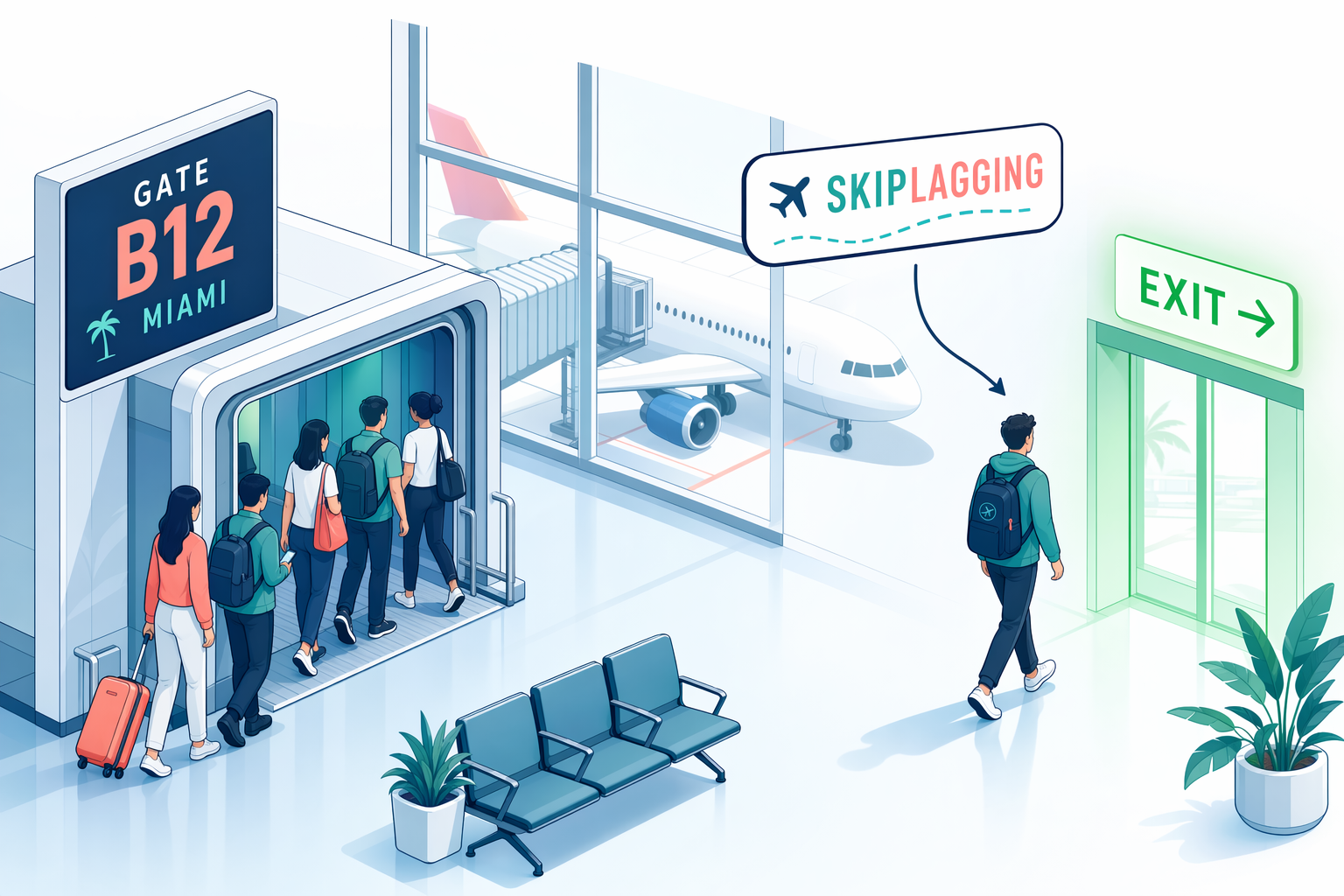
The result? A flight from New York to Dallas might cost more than a flight from New York to Miami through Dallas, even though the Miami trip covers more distance. Airlines price routes based on demand and competition, not miles flown.
The savings can be significant. Reports show skiplagged fares averaging 30-50% less than standard bookings on certain routes — with some extreme cases saving over $600 on a single ticket.
Yes. Skiplagging is not illegal under any U.S. federal law. No one is going to arrest you for getting off a plane at your layover city. It's not fraud. It's not a crime.
But here's the catch: it absolutely violates nearly every airline's contract of carriage. That's the dense legal document you agree to when you buy a ticket. Every major U.S. carrier — American, United, Delta, Southwest — explicitly prohibits hidden city ticketing in their terms.
The distinction matters. It's not a criminal issue. It's a contractual one. And airlines have shown they're willing to enforce those contracts aggressively.
The website Skiplagged.com, founded by Aktarer Zaman in 2013, made hidden city ticketing mainstream by building a search engine specifically designed to surface these fare loopholes. The airlines were not amused.
In 2014, United Airlines and Orbitz filed a lawsuit against Zaman, demanding $75,000 and calling the site "unfair competition" that promoted "strictly prohibited" practices. Orbitz eventually settled, but United pressed forward. In 2015, a federal judge in Chicago dismissed the case — ruling the court lacked jurisdiction since Zaman didn't live or do business in Illinois.
Southwest Airlines tried again in 2021 with a similar suit. Also dismissed.
Then came American Airlines in 2023. This time, the airline took a different legal approach and won. In October 2024, a federal jury in Fort Worth ordered Skiplagged to pay $9.4 million — split between $4.7 million in revenue disgorgement and $4.7 million for copyright infringement related to Skiplagged's use of American's fare data. The court rejected the trademark claim, but the copyright angle stuck.
The takeaway: airlines are getting more creative in how they fight skiplagging, and they're starting to win.
This is where things get serious. Skiplagging might save you money, but the potential downsides in 2026 are very real.
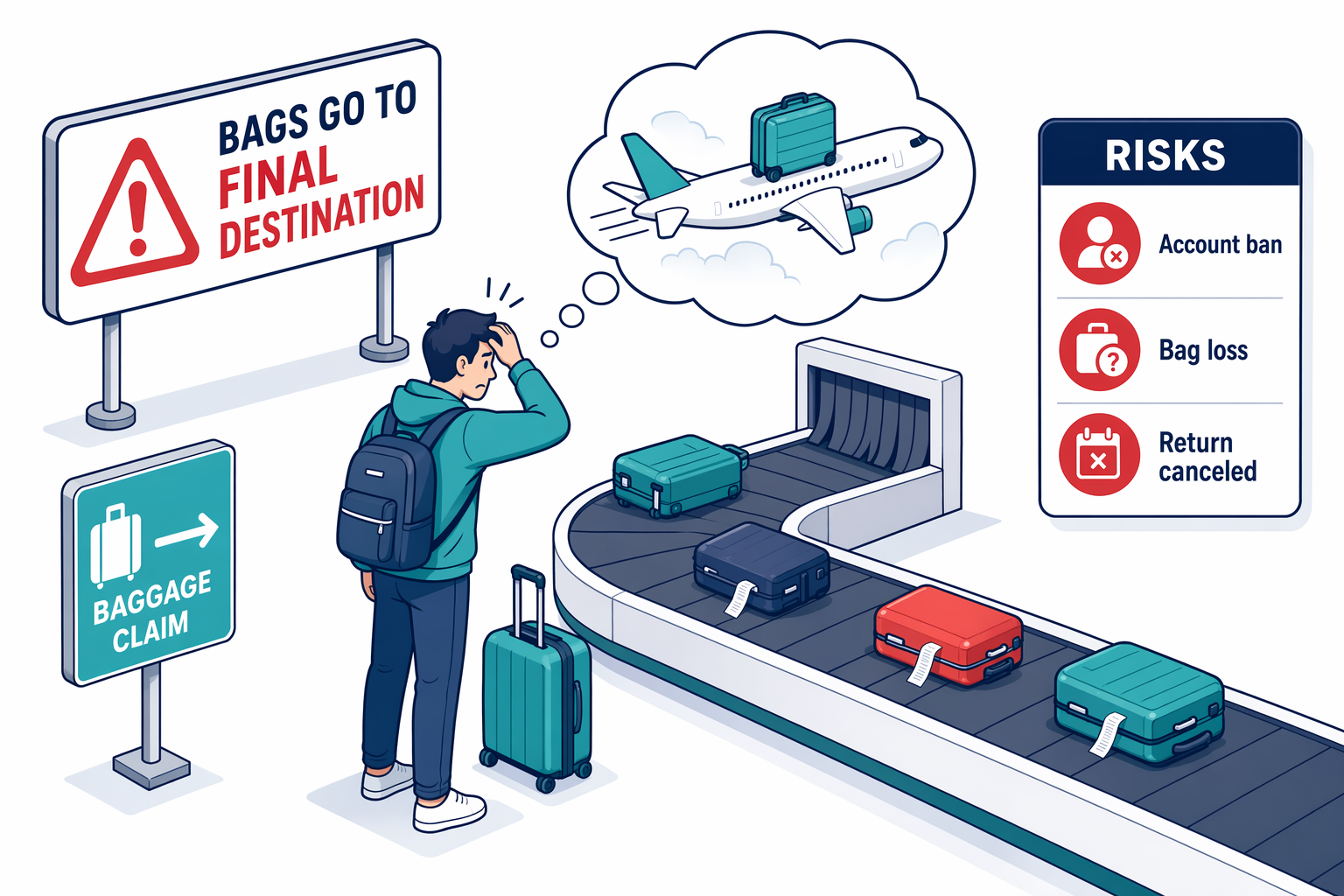
When you check a bag, it gets tagged to your final ticketed destination — not your layover city. If you're skiplagging, your suitcase keeps going while you walk out of the airport. You'll need to travel carry-on only. Every single time.
The moment you no-show on any flight segment, the airline cancels every remaining segment on that ticket. Book a round trip and skiplag on the outbound? Your return flight is gone. This means skiplagging only works with one-way tickets, which can be pricier and erode your savings.
Airlines are using automated detection systems to flag repeated skiplagging patterns. Get caught, and you risk losing your entire frequent flyer balance — miles, points, elite status, all of it. United has publicly stated it reserves the right to permanently ban passengers and delete their MileagePlus accounts.
Some airlines have started retroactively charging skiplagging passengers the difference between what they paid and what a direct ticket would have cost. American Airlines' system now automatically flags reservations where the passenger's home address matches the connecting city.
You can only skiplag to a hub city — it has to be the connection point on a route, not any random destination. And you can never do it on the first leg of a round trip without losing the return. These constraints limit when the trick is actually usable.
| Risk | Severity | How Likely in 2026 |
|---|---|---|
| Checked bags sent to wrong city | High | 100% — guaranteed every time |
| Return flight canceled | High | 100% if booked as round trip |
| Frequent flyer account closed | High | Moderate — rising with detection tech |
| Retroactive fare adjustment bill | Medium | Low-moderate — varies by airline |
| Airline ban | High | Low — but increasing for repeat offenders |
| Last-minute gate or route change | Medium | Low — but unpredictable and unrecoverable |
American Airlines is the most aggressive enforcer right now, following its $9.4 million legal victory. Its automated detection systems flag suspicious booking patterns and address mismatches.
United Airlines has long been vocal about banning skiplagging and has threatened account termination and even debt collection for passengers caught doing it. Delta and Southwest prohibit it in their contracts of carriage but have been quieter on individual enforcement — though that doesn't mean they're not watching.
The trend across the industry is clear: enforcement is escalating, not relaxing.
Even if you're willing to accept the risks, skiplagging doesn't always work. Avoid it entirely if:
Skiplagging gets attention because it feels like beating the system. But in 2026, there are legitimate ways to save just as much — or more — without putting your frequent flyer account or your luggage at risk.
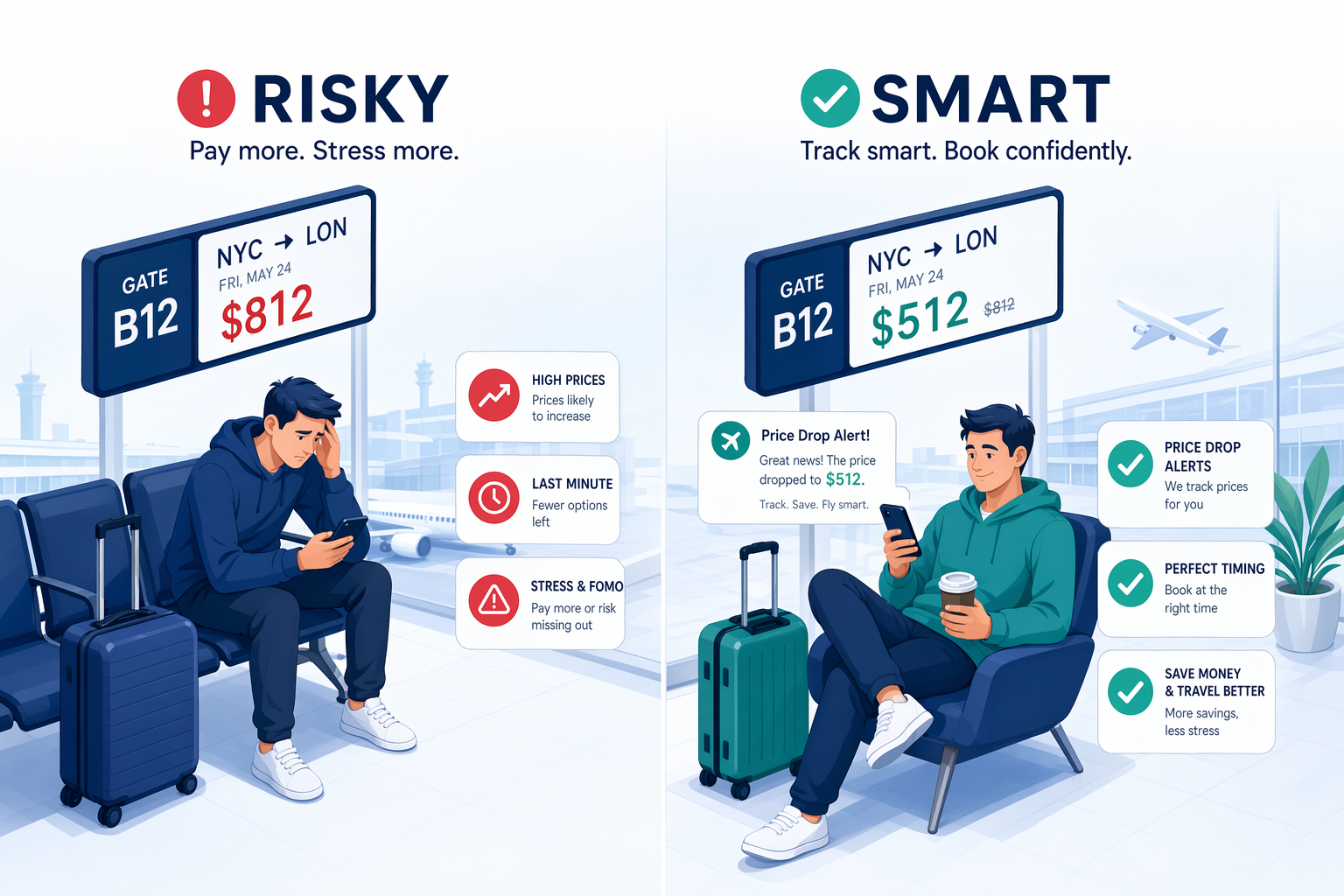
Book flexible fares and monitor prices. Airfare is dynamic. Prices drop after purchase all the time — sometimes by hundreds of dollars. The problem is that most travelers don't have time to check daily. That's exactly the problem Autopilot solves. It monitors your booked flights and hotels around the clock and automatically rebooks you when prices drop — no effort, no risk, completely within airline rules.
Think about it: instead of gaming the system with hidden city tickets and hoping you don't get flagged, a tool like Autopilot saves you money the safe way. You keep your bags, your return flight, your frequent flyer account, and your peace of mind.
Use fare calendars and flexible date searches. Shifting your travel dates by even a day or two can save more than skiplagging on many routes. Combine flexible dates with post-booking price monitoring from Autopilot, and you're stacking savings without any of the hidden city headaches.
Set fare alerts for your routes. If you're flexible on timing, fare alerts can catch deep discounts. And once you book, let Autopilot keep watching the price so you capture any further drops automatically.
Skiplagging is a real money-saving technique that really does work — sometimes. But it comes with escalating risks that make it a worse bet every year. Airlines are investing heavily in detection, winning major lawsuits, and making examples of repeat offenders.
For occasional travelers willing to fly carry-on with one-way tickets and no loyalty program ties, it can still make sense on the right route. For everyone else, the smarter play is using legitimate price-tracking tools that capture savings without the gamble.
Try Autopilot free and let it handle the price monitoring for you — so you can save money on flights the way that won't get your miles deleted.
Skiplagging (also called hidden city ticketing) is booking a flight with a connection at your real destination, then skipping the final leg of the trip. You pay less because connecting flights are often cheaper than direct routes to popular cities.
No. Skiplagging is not illegal under U.S. federal law. However, it violates the contract of carriage of virtually every major airline. The consequences are contractual, not criminal — but airlines are increasingly willing to enforce penalties.
Yes. Airlines can terminate your frequent flyer account, delete your miles and elite status, ban you from future flights, and even retroactively bill you for the fare difference. United, American, and Delta all reserve these rights in their contracts of carriage.
No. Checked bags are routed to your ticket's final destination, not your layover city. If you skiplag, your bag will end up in a city you never intended to visit. You must travel with carry-on luggage only.
No. If you skip any leg of your itinerary, the airline automatically cancels all remaining segments — including your return flight. Skiplagging only works with one-way tickets.
Savings vary widely by route, but reports suggest 30-50% on average for routes where hidden city pricing applies. Some extreme examples show savings over $600 on a single ticket. However, you'll need one-way tickets (often pricier) and can't check bags, which can eat into the discount.
In October 2024, a federal jury ordered Skiplagged.com to pay American Airlines $9.4 million — $4.7 million in revenue disgorgement and $4.7 million for copyright infringement. This followed a similar (dismissed) lawsuit by United Airlines in 2014-2015 and a dismissed Southwest lawsuit in 2021.
Price monitoring tools like Autopilot track your booked flights and automatically rebook when prices drop. You get real savings without risking your frequent flyer account, your luggage, or your return flight — and it's fully compliant with airline policies.
Disclaimer: This article is for informational purposes only. Skiplagging may violate airline terms of service and could result in penalties. Always review your airline's contract of carriage before booking. Information is accurate as of April 2026.

