

How to Get Upgraded to First Class: 9 Strategies That Actually Work in 2026
How to Get Upgraded to First Class: 9 Strategies That Actually Work in 2026

How to Get Upgraded to First Class: 9 Strategies That Actually Work in 2026
Updated May 2026 — Every realistic path to a business or first class upgrade, from elite status and miles to bid programs and operational tricks.
Let's get the uncomfortable truth out of the way first: scoring a free flight upgrade in 2026 is harder than it's ever been.
Airlines have gotten ruthlessly good at monetizing every premium seat. The days of charming a gate agent into a first class bump are basically extinct. Algorithms now decide who gets upgraded — and when — with zero room for improvisation.
But that doesn't mean upgrades are impossible. It means you need a strategy. Here are nine methods that actually work — ranked from most reliable to least.
Elite frequent flyer status remains the single most reliable path to complimentary upgrades. Every major U.S. airline offers automatic upgrade lists for their elite members — but the tier you hold matters enormously.
Here's the reality: Silver-level status on most airlines will get you on the upgrade list, sure. But you'll be at the very bottom. Diamond, Executive Platinum, or Premier 1K members clear first. On popular routes, lower-tier elites almost never clear.
| Airline | Top-Tier Status | Upgrade Window | Key Restrictions |
|---|---|---|---|
| Delta | Diamond Medallion | 120 hours before departure | Basic Economy excluded; up to 75% of premium seats now sold |
| United | Premier 1K | Up to 96 hours out | Award tickets now eligible (as of Feb 2026); dynamic PlusPoints pricing coming 2027 |
| American | Executive Platinum | 100 hours out | Basic Economy excluded from systemwide upgrades after May 18, 2026 |
| Alaska | MVP Gold 75K/100K | 120 hours out | Saver fares (X class) not added to list until 2 hours before departure |
| JetBlue | Mosaic+ | 24 hours out | Upgrades to Mint on transcontinental routes only when available |
The uncomfortable math: Delta now aims to sell roughly 75% of its premium cabin inventory at retail prices. That leaves just a quarter of first class seats available for complimentary upgrades — and those go to the highest-tier elites first.
Pro tip: If you're chasing status, pick one airline and stick with it. Splitting flying across three programs means you'll never reach the tier where upgrades actually clear.
Every major airline lets you use frequent flyer miles to upgrade a paid ticket. But in 2026, most have moved to dynamic pricing — meaning the miles required fluctuate based on route, date, and demand.
Here's what to expect:
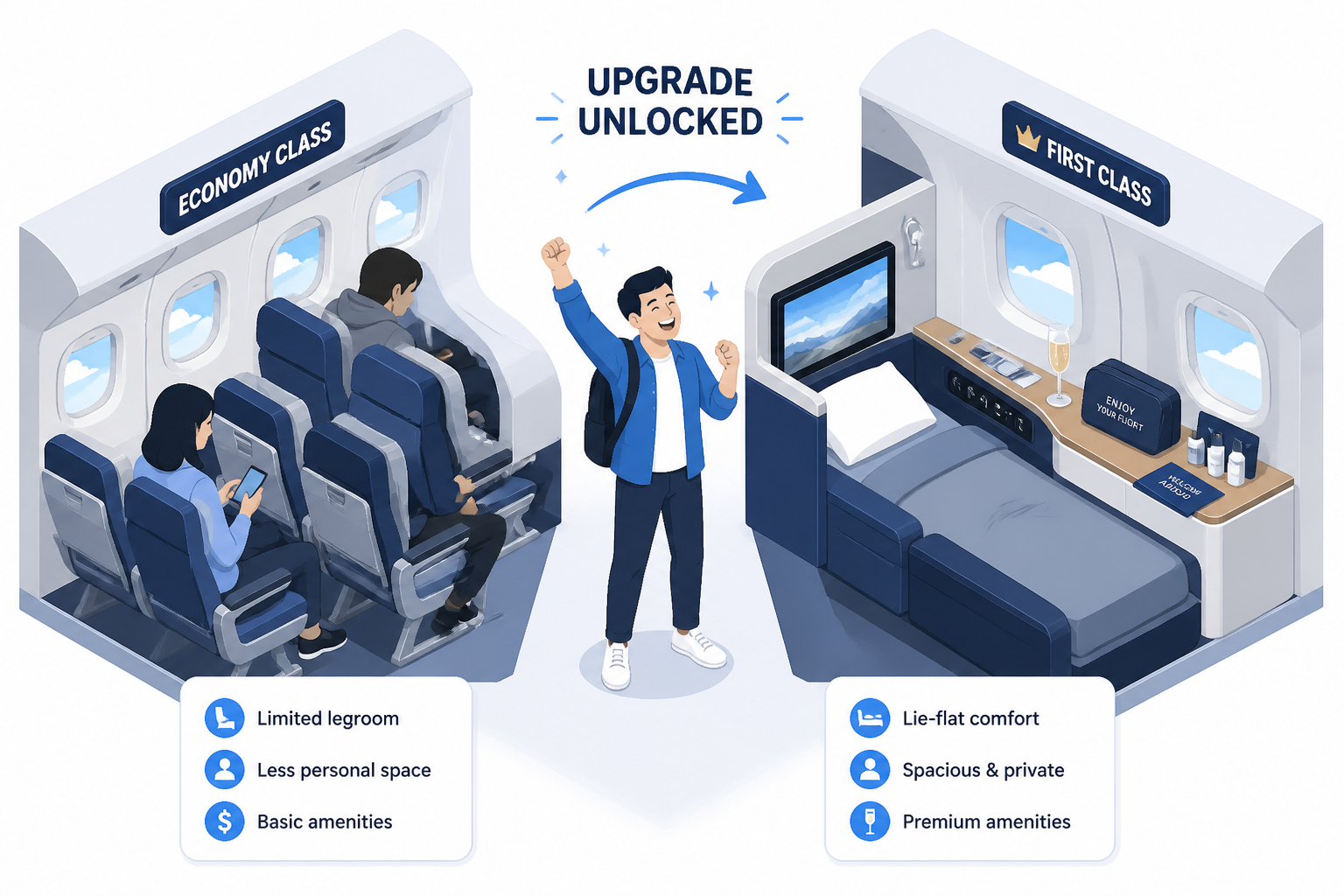
The catch with mileage upgrades: you can usually only go up one cabin class. Economy to premium economy, or premium economy to business. Jumping from the back of the bus straight to a lie-flat seat on a long-haul flight? That's almost never available as an upgrade — you'd need to book the premium cabin outright.
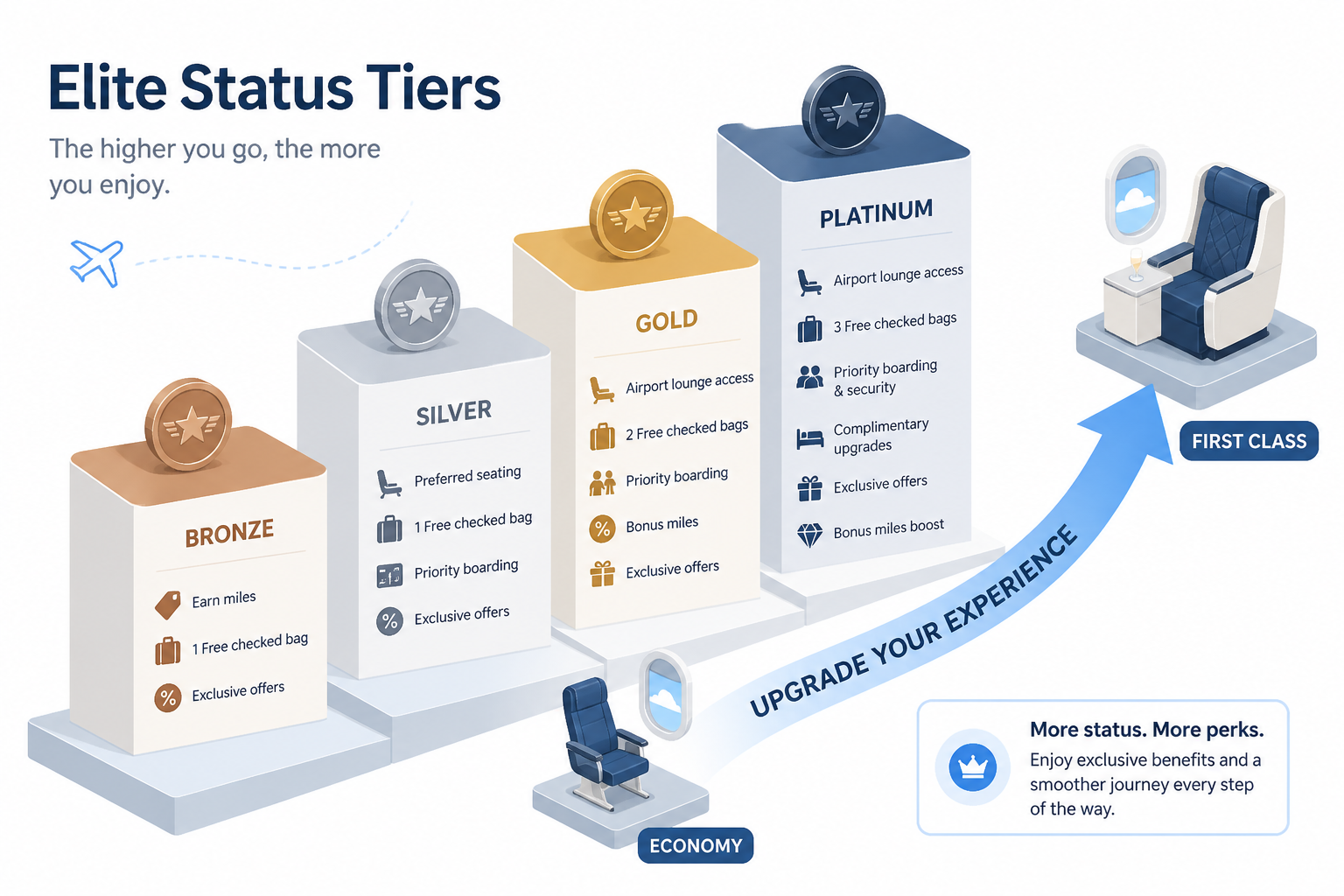
This is where top-tier status really pays off. Several airlines award upgrade certificates to their highest elites — and these are far more powerful than the complimentary upgrade list.
American Airlines gives Executive Platinum members systemwide upgrade certificates that cover up to three flight segments in one direction. These can upgrade economy to business or business to first on international routes.
United's Premier 1K members receive six Global Premier Upgrades upon qualifying. These confirm at the time of booking (space permitting) rather than waiting on a standby list.
Delta offers Regional Upgrade Certificates (RUCs) and Global Upgrade Certificates (GUCs) as Choice Benefits for Platinum and Diamond members. GUCs are the holy grail — they can upgrade you to Delta One on long-haul international flights.
Upgrade certificates always take priority over complimentary upgrade requests on the standby list. If you have them, use them.
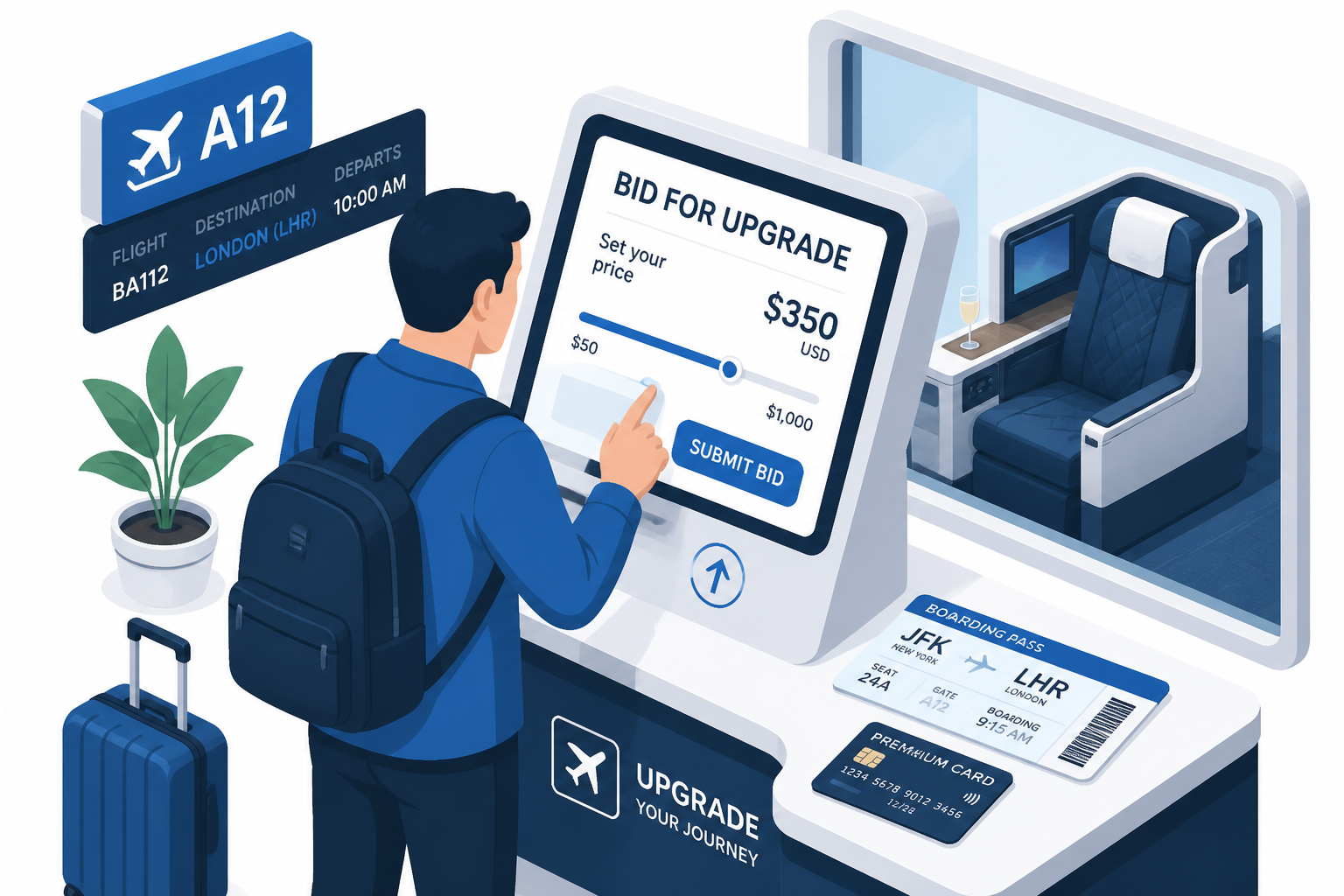
Upgrade bidding programs have quietly become one of the best value plays in aviation. Dozens of airlines now let you name your price for a premium cabin seat after booking — and you'd be surprised how often modest bids win.
Most of these programs run through a platform called Plusgrade. Here's how it works: a few days before your flight, you'll receive an email inviting you to bid. You set a dollar amount within the airline's suggested range. If your bid is accepted, you get the upgrade at your bid price — often 40–70% less than retail.
| Airline | Program Name | Bid Window | What You Can Bid For |
|---|---|---|---|
| Virgin Atlantic | Upgrade Bid | Up to 7 days before departure | Premium or Upper Class |
| Singapore Airlines | mySQupgrade | Varies by route | Cash, miles, or a mix of both |
| Lufthansa | myOffer | Up to 48 hours before departure | Premium Economy, Business, or First |
| Air Canada | AC Bid | Up to 48 hours before departure | Premium Economy or Business (cash only) |
| Qantas | Bid Now Upgrades | Several days before departure | Business or First |
| Etihad | Bid for an Upgrade | Up to 72 hours before departure | Business or First |
Singapore Airlines stands out here because it lets you bid with a mix of cash and KrisFlyer miles. That flexibility is rare and genuinely useful if you're sitting on a pile of miles but don't have enough for a full upgrade.
The key to winning bids: don't lowball. Bidding at or just above the minimum is tempting but rarely wins. Aim for roughly the midpoint of the suggested range. Your odds improve dramatically on flights that aren't completely sold out in economy.
Planning an international trip where a premium cabin would make all the difference? Let Autopilot find the best fares — then try a bid upgrade on top.
Airlines increasingly offer discounted paid upgrades during online check-in (usually 24 hours before departure) or at the airport. These pop-up offers can be genuinely good deals — especially on flights where the premium cabin hasn't sold well.
Typical pricing varies wildly. A domestic first class upgrade might cost $50–$200 on a short hop, while a transcon upgrade could run $300–$800. International business class? Usually $500–$2,000 depending on the route.
The trick is checking compulsively. Some airlines show upgrade offers during mobile check-in, at the kiosk, or even in a notification after you've checked in. These prices are dynamic and can change (or disappear) within hours.
The right airline credit card won't magically hand you a first class seat. But it can put you in a dramatically better position to earn one.
Here's what the top-tier airline cards actually do for upgrades:
The real play with credit cards isn't a direct upgrade benefit — it's using card spending to earn or maintain the elite status that gets you on the complimentary upgrade list in the first place.
Not all flights have the same upgrade odds. If you're serious about clearing the upgrade list, you need to think strategically about when and where you fly.
Best odds for upgrades:
Conversely, Monday morning and Friday evening flights on business routes (think New York–Chicago, LA–San Francisco) are basically impossible for upgrades. Every premium seat is bought at full price.
This is the closest thing to a "hack" that still works. When a flight is oversold and the gate agent asks for volunteers to take a later flight, stepping up can come with serious perks — including upgrades on the rebooking.
Here's the playbook: when you volunteer, negotiate. Airlines typically start with a travel voucher, but you can ask for a confirmed seat in a higher cabin on the next flight. Gate agents have discretion here, and solving their overbooking problem makes you their favorite person at the gate.
The compensation can stack up fast. Under DOT rules, involuntary bumps on domestic flights can earn you up to $1,550 in cash if the delay exceeds two hours. Voluntary bumps usually come with $200–$800 in vouchers plus rebooking flexibility.
This works best when you have flexible travel plans and aren't connecting to another flight. It's essentially trading your time for a premium experience.
Whenever you're booking flights for a trip — whether you're hoping for an upgrade or just want the best deal — Autopilot can help you find and book the right fare.
If your original flight is packed but a later (or earlier) departure has wide-open premium cabin availability, a same-day change can effectively act as an upgrade opportunity.
All major U.S. airlines allow same-day changes, though the rules vary:
The strategy: if you're on the upgrade list for your original flight but sitting at position 8 of 2 available seats, check whether an earlier or later departure has better upgrade odds. A same-day change to that flight — combined with your existing upgrade request — can dramatically improve your chances.
Let's kill a few zombies that refuse to die:
Getting upgraded in 2026 comes down to one thing: being strategic. Earn elite status with one airline. Use miles and certificates wisely. Try bid programs on international flights. And pick your routes and travel days carefully.
The era of casual upgrades is over. But for travelers who understand the system, premium cabin seats are absolutely still accessible — you just need to know which levers to pull.
Ready to start planning your next trip? Search flights on Autopilot and find the right fare for your upgrade strategy.
The most reliable way to get a free first class upgrade is through airline elite status. When you hold top-tier status (like Diamond Medallion on Delta or Premier 1K on United), you're automatically placed on the complimentary upgrade list for every eligible flight. Upgrades clear based on status tier, typically 72–120 hours before departure. Without elite status, free upgrades are extremely rare in 2026.
Bid-for-upgrade programs are often the cheapest path to business class. Airlines like Virgin Atlantic, Lufthansa, Singapore Airlines, and Air Canada let you bid a price for an upgrade after booking. Winning bids are typically 40–70% less than the retail price difference. Alternatively, check for paid upgrade offers during online check-in — airlines sometimes offer steep discounts when premium seats haven't sold.
No. In 2026, airline upgrades are managed entirely by automated systems and algorithms based on elite status, fare class, and check-in time. Gate agents do not have discretion to upgrade passengers based on appearance. While dressing professionally is never a bad idea, it has zero impact on upgrade decisions at modern airlines.
Most major airlines now use dynamic pricing for mileage upgrades, so costs vary by route, date, and demand. Typical ranges: domestic first class upgrades run 10,000–30,000 miles, while international business class upgrades can cost 25,000–60,000+ miles, sometimes with a cash copay. Alaska Airlines is one of the few with relatively predictable pricing at 15,000 miles for a domestic first class upgrade.
You can ask, but it almost never works. Gate agents manage upgrades through an automated system that prioritizes elite status members and fare class. They typically cannot override the system to offer discretionary upgrades. The better approach is ensuring you're already on the upgrade list through elite status, miles, or a paid upgrade request before you reach the gate.
Tuesday and Wednesday flights consistently offer the best upgrade odds because business travel demand is lower and fewer premium seats are sold at retail prices. Red-eye flights and off-peak travel periods (January–March, September–November) also dramatically improve your chances. Avoid Monday mornings and Friday evenings on business routes — those flights almost never have upgrade availability.
Premium airline credit cards don't directly upgrade you, but they accelerate the path to elite status — which is what triggers complimentary upgrades. Cards like the Delta SkyMiles Reserve, United Club Infinite, and Citi AAdvantage Executive earn qualifying points toward status through everyday spending. The Delta Reserve also places holders on the Medallion upgrade list even without full Medallion status.
After booking an economy ticket on participating airlines, you'll receive an email (typically 3–7 days before departure) inviting you to bid for a premium cabin seat. You enter a dollar amount within the airline's suggested range. If the premium cabin has unsold seats and your bid is competitive, you'll receive a confirmation email with the upgrade. Most programs are powered by a platform called Plusgrade and over two dozen airlines participate globally.
Disclaimer: Policies may change. Always verify directly with the hotel or airline before making travel decisions.

