

How Far in Advance Should You Book Flights? (Domestic & International)
The data-backed booking windows for domestic and international flights, plus strategies to lock in the lowest fare every time.

The data-backed booking windows for domestic and international flights, plus strategies to lock in the lowest fare every time.
There is no single magic day to buy a plane ticket. But there is a window — and if you book inside it, you will almost certainly pay less than someone who waited too long or jumped too early.
Here is what the data says:
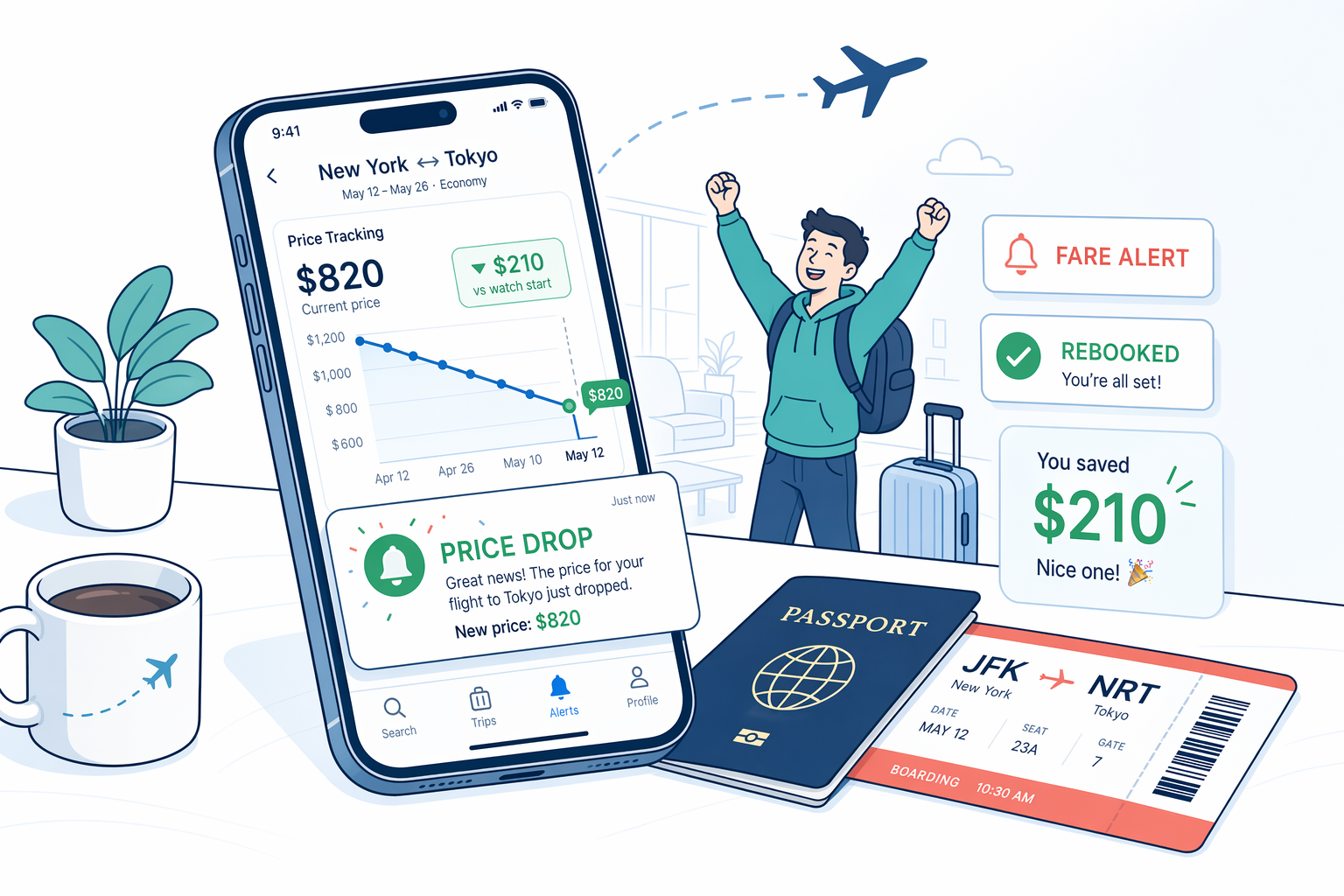
And here is the part most people miss: once you book, the price can still drop. Automatic fare monitoring from Autopilot watches your reservation and captures those post-booking savings so you do not have to.
Airlines reprice seats hundreds of times per day. They use algorithms that factor in demand, seat inventory, competitor fares, and how far out the departure date sits.
The result is a pricing curve. Book too early and you pay the opening-day premium airlines set when they first load inventory (typically 330 days out). Wait too long and you are competing with desperate buyers willing to pay whatever it takes.
The goal is to land in the middle — what analysts call the Goldilocks window — where supply still exceeds demand and airlines are motivated to fill seats.
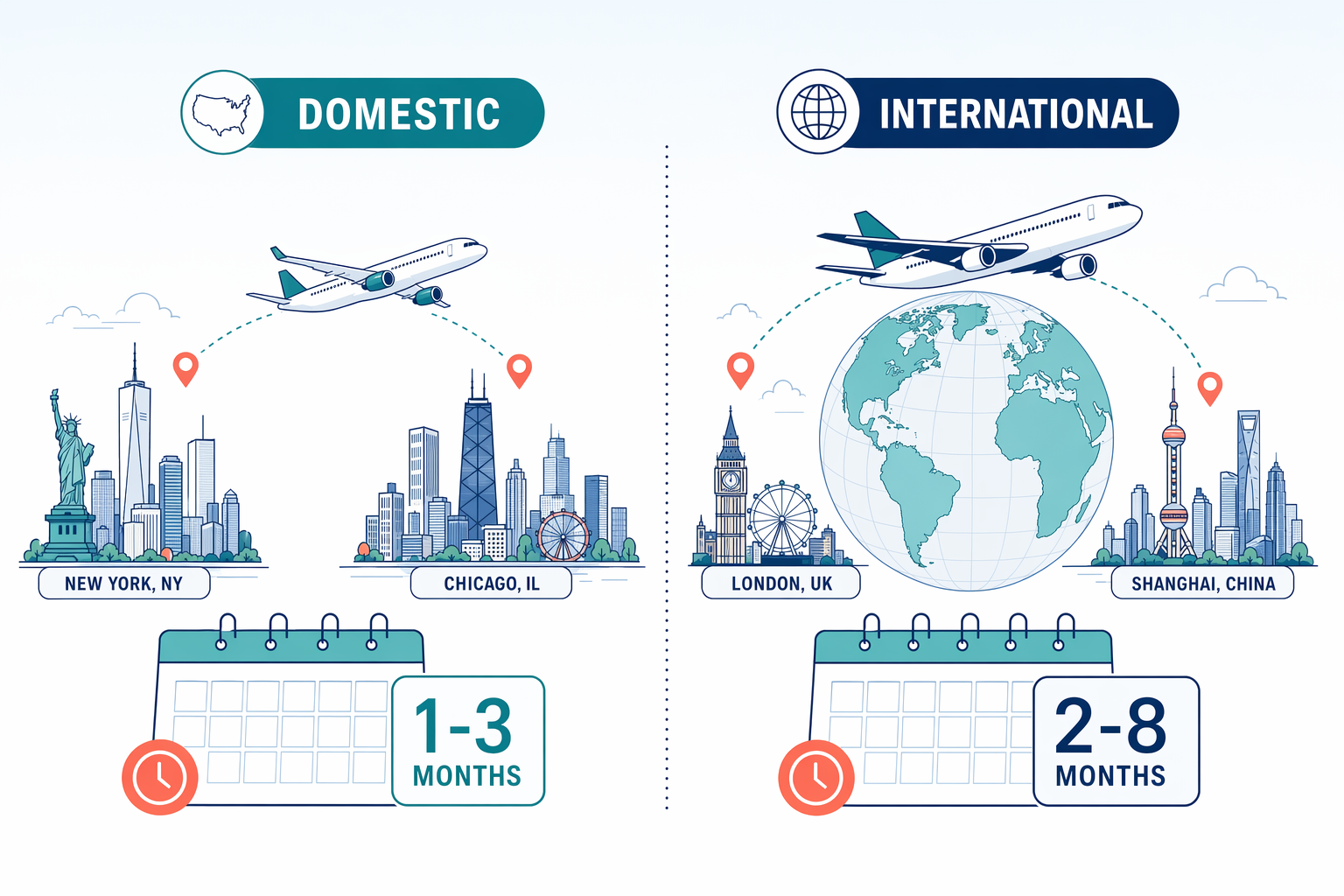
For flights within the United States, the data is remarkably consistent. Google Flights research from 2025 pegged 43 days before departure as the peak savings point for domestic economy fares.
Expedia's 2026 Air Hacks report found that the most affordable domestic bookings fall 15 to 30 days out, saving travelers an average of $130 compared to booking six months in advance.
The broader consensus: 28 to 60 days before your travel date is the primary booking zone.
Within that range, adjust for seasonality:
One pattern to watch: fares rise sharply inside 21 days of departure. That three-week mark is essentially the cliff edge. If your trip is less than three weeks away and you have not booked, expect to pay a premium.
The good news? Even after you book, the price story is not over. Domestic fares fluctuate constantly, and most travelers miss post-booking drops simply because they are not watching. That is exactly the problem Autopilot solves — it tracks your booked fare automatically and handles the rebooking process if a lower price appears.
International airfare follows a wider and more variable curve. The general recommendation is 2 to 8 months before departure, but the ideal lead time depends heavily on where you are going.
| Destination | Ideal Booking Window | Notes |
|---|---|---|
| Europe | 4 to 6 months (120 to 160 days) | Summer routes to Southern Europe benefit from the 6-month mark |
| Asia | 3 to 4 months (90 to 120 days) | Shoulder-season trips (March to May, Sept to Nov) allow tighter windows |
| South America | 2.5 to 3.5 months (70 to 100 days) | Routes from southern U.S. hubs tend to price lower closer in |
| Australia / New Zealand | 4 to 6 months (120 to 180 days) | Limited route competition means early booking pays off |
| Caribbean / Mexico | 2 to 4 months | High competition among carriers keeps prices flexible |
Google Flights data shows that travelers who book at least 49 days before international departure consistently find lower fares.
Expedia goes further: booking 31 to 45 days ahead saves an average of $190 compared to booking six months out. That means the old advice to book half a year early may actually cost you more.
The takeaway: monitor fares starting 6 to 8 months out, but do not rush to buy at the first price you see. The best deals often appear 2 to 5 months before departure.
With international fares running into the thousands, even a small percentage drop after booking means real money. That is why setting up automatic fare tracking with Autopilot is especially worthwhile on pricier international itineraries.
Holiday pricing follows its own rules. Airlines know demand will spike, and they adjust pricing earlier and more aggressively than for regular travel.
| Holiday | Best Booking Window | Key Detail |
|---|---|---|
| Thanksgiving | 24 to 59 days before (late Sept to early Oct) | Lowest average fare around 35 days before the holiday |
| Christmas / New Year | 32 to 73 days before (mid-Oct to late Nov) | Lowest average fare around 51 days before departure |
| Spring Break | 1 to 3 months ahead | Prices surge once schools publish calendars |
| Summer peak (June to Aug) | 3 to 5 months (domestic), 4 to 6 months (international) | Demand builds steadily from February onward |
A practical rule: have your holiday tickets booked by Halloween.
Google Flights data shows that Thanksgiving fares hit their lowest point around October 14, and Christmas fares bottom out in early-to-mid November. Waiting until December to book Decembertravel is the most expensive strategy possible.
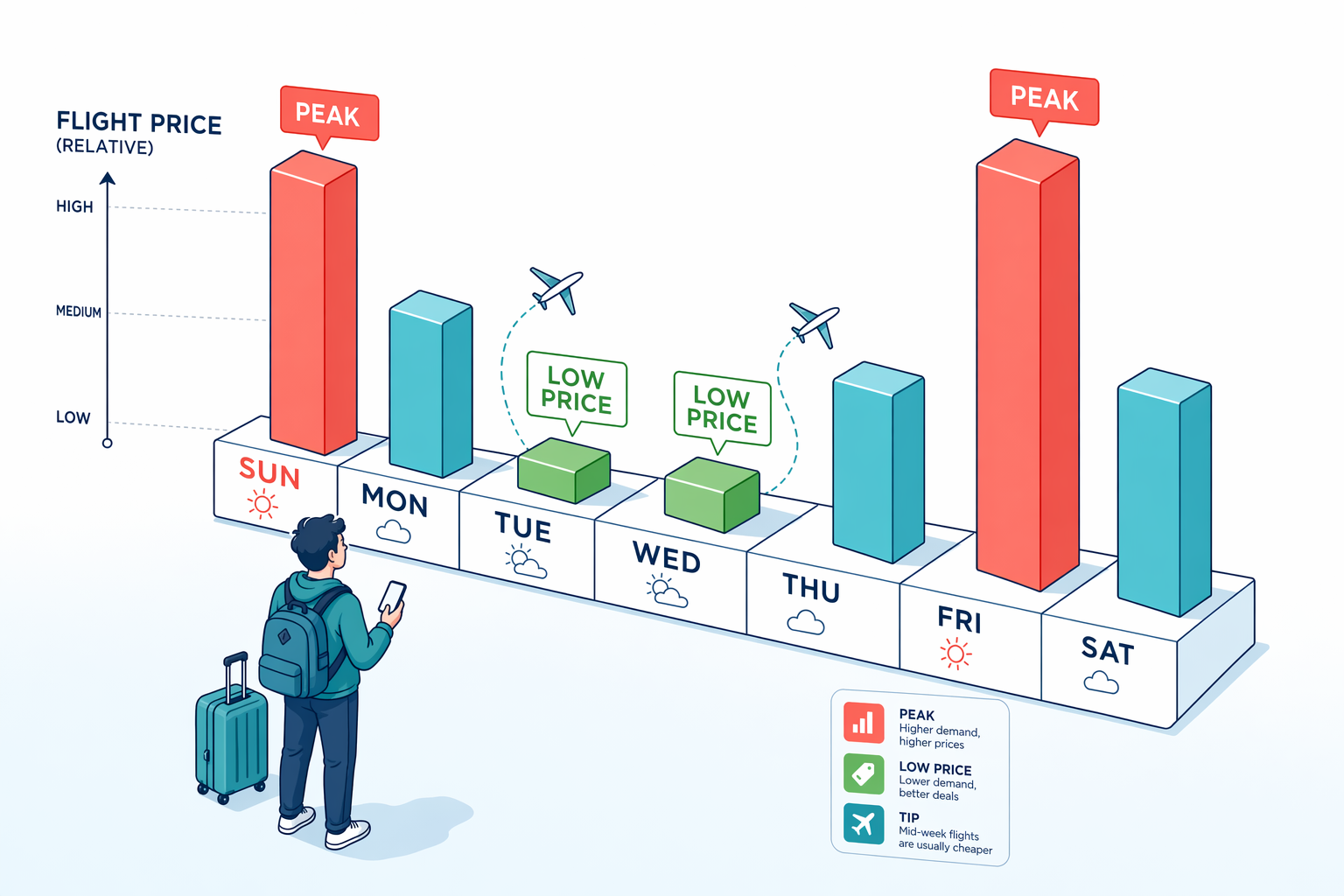
For years, the prevailing advice was to book on Tuesdays. That is outdated.
Expedia's 2026 data — covering millions of flight bookings — found that Friday has replaced Tuesday as the cheapest day to book flights. The shift is driven by changes in business travel patterns: fewer corporate travelers fly on Fridays now, which lowers demand.
Here is how the days compare for domestic departures:
For international flights, the day-of-week effect is smaller, but midweek departures still offer a modest edge.
That said, obsessing over which day to click "buy" matters far less than booking during the right window. A Wednesday purchase five months out will almost always beat a Friday purchase two days before departure.
The idea that airlines slash prices at the last minute to fill empty seats is mostly a myth — at least for economy fares.
Modern revenue management systems price remaining inventory at a premium, knowing that last-minute buyers (often business travelers) will pay it.
When last-minute can work:
When it almost never works:
The numbers: fares typically climb 20 to 40% inside the three-week window before departure, and the increase accelerates in the final seven days.
Here is the reality that all the booking-window data points to: there is no single perfect day to buy a plane ticket. Airline pricing is dynamic, and the lowest fare for your specific route might appear at any point within the recommended window.
The most effective strategy combines two steps:
This eliminates the anxiety of trying to time the absolute lowest price. You book with confidence inside the optimal window, and if a better price surfaces later, it gets handled automatically.
No spreadsheets. No daily price checks. No buyer's remorse.
Try Autopilot free — it watches your fares so you do not have to.
Beyond booking windows, the month you fly has a major impact on price. Here is how the calendar breaks down:
| Month | Price Level | Why |
|---|---|---|
| January | Low (cheapest for domestic) | Post-holiday demand collapse; 19% cheaper than December |
| February | Low to moderate | Shoulder season before spring break |
| March to April | Moderate to high | Spring break demand spikes prices on warm-weather routes |
| May | Moderate | Pre-summer gap; good deals on Europe before peak season |
| June to July | High | Peak summer travel; highest demand of the year |
| August | Low (cheapest overall) | 29% cheaper than December; $120 average savings per ticket |
| September | Low | Shoulder season; kids back in school |
| October | Low to moderate | Mild demand; great for Europe and Asia |
| November | Moderate (spikes around Thanksgiving) | Early November is cheap; late November is not |
| December | High (most expensive) | Holiday demand drives prices to annual highs |
For domestic U.S. flights, book 1 to 3 months before departure. Google Flights puts the peak savings point at approximately 43 days out, while Expedia's research suggests 15 to 30 days offers the best value. Avoid booking inside three weeks of departure, when fares typically spike.
International flights benefit from a 2- to 8-month lead time, depending on destination. Book Europe and Australia 4 to 6 months ahead. Asia works well at 3 to 4 months. South America and the Caribbean can be booked 2 to 3.5 months in advance.
No. Expedia's 2026 data shows Friday has overtaken Tuesday as the cheapest day to book, driven by shifts in business travel patterns. That said, the day you book matters far less than booking during the correct advance window.
Rarely. Airfares typically increase 20 to 40% inside three weeks of departure. Exceptions include off-peak routes during low-demand periods and occasional error fares or flash sales. For most travelers, last-minute booking is the most expensive strategy.
This is exactly what automatic fare monitoring solves. A service like Autopilot tracks your reservation and works to get you the lower fare if the price drops. It covers most major U.S. airlines, so you never have to worry about overpaying.
Yes. Thanksgiving fares typically bottom out around 35 days before the holiday (mid-October), and Christmas fares hit their lowest about 51 days before departure (early November). A safe rule: have holiday tickets locked in by Halloween.
Minor fluctuations exist, but no study has found consistent, meaningfulsavings tied to booking at a specific hour. Focus on booking during the right advance window rather than hunting for a magic time of day.
Autopilot monitors fares across most major U.S. airlines, including Delta, United, American, Southwest, JetBlue, and Alaska. After you book, it watches your reservation and handles rebooking if a lower fare appears — keeping your same confirmation number and seats.
Autopilot is an independent third-party service that helps travelers after they book. We are not affiliated with any airline, hotel, or loyalty program. Airline policies and availability can change — always check the provider's official terms.

