Packing cubes are one of those travel accessories everyone seems to have an opinion about. Half the internet swears they're life-changing. The other half says they're just glorified zippered bags.
So which is it?
After years of traveling with (and without) packing cubes, here's the honest answer: they don't do what most people think they do. But they're still worth buying for almost every traveler. Let me explain.
The Short Answer: Yes, Packing Cubes Are Worth It
Packing cubes are worth it — but not because they magically create extra space in your luggage. That's the biggest misconception out there.
What they actually do is keep your bag organized, speed up packing and unpacking, and make finding specific items effortless. If you've ever torn through a suitcase looking for a pair of socks at 6 AM in a hotel room, you understand why that matters.
For carry-on-only travelers especially, they're borderline essential. Compression packing cubes can squeeze a week's worth of clothes into an overhead bin bag — and avoiding a checked bag fee on a single round trip basically pays for the cubes.
Planning a trip? Book through Autopilot and we'll monitor your fare after you book — if the price drops, we get you the difference back automatically.
Do Packing Cubes Actually Save Space?
This is where it gets nuanced.
Regular packing cubes save a modest amount of space — roughly 10-15%. They don't compress anything. What they do is eliminate the random air gaps that happen when you toss loose clothes into a suitcase. Think of it like stacking rectangular blocks instead of throwing oddly shaped bundles into a box.
Compression packing cubes are a different story. These have a dual-zipper system — one zip closes the cube, a second zip compresses the contents. They can save 20-50% of space depending on what you're packing.
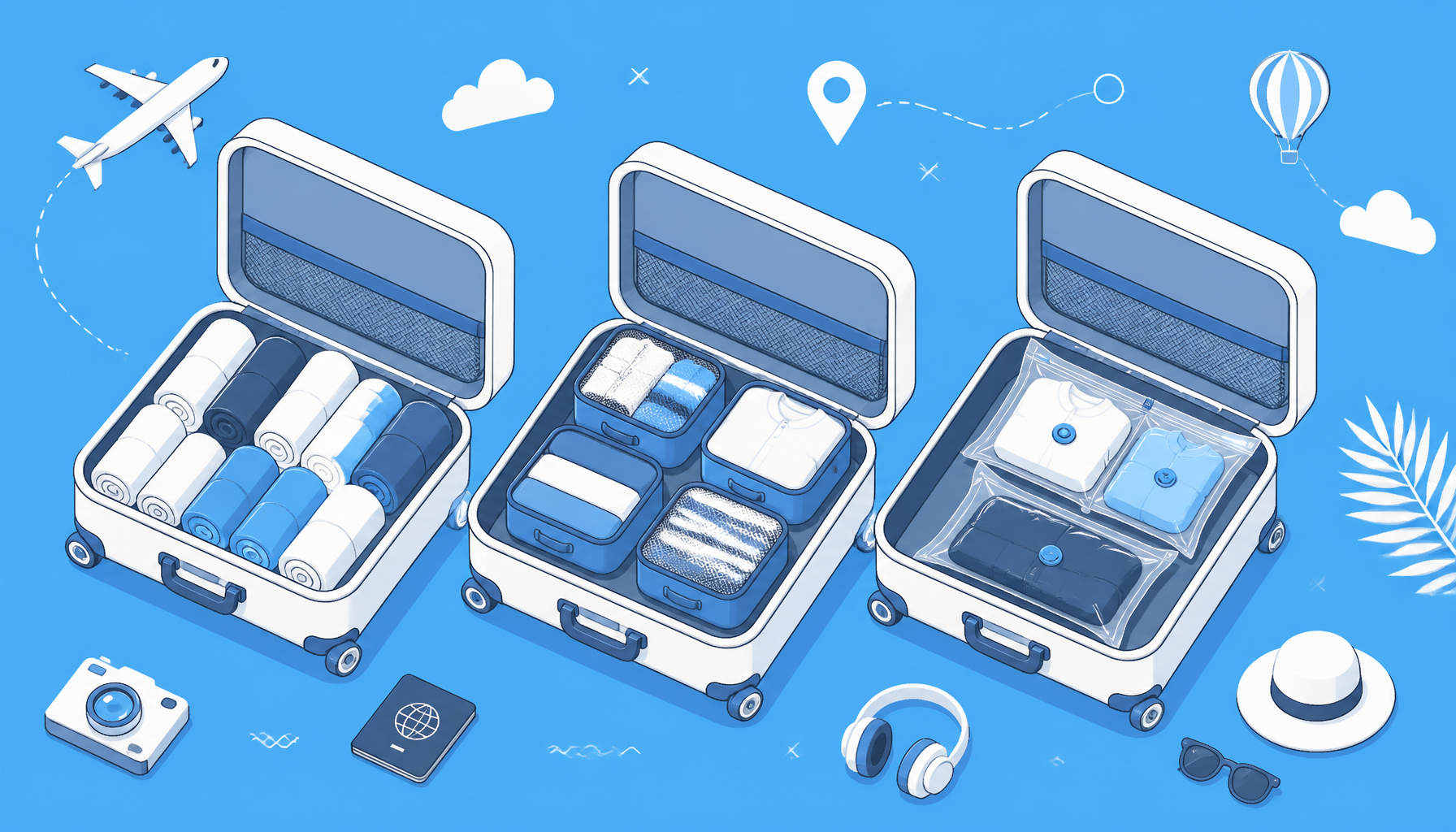
Soft items like t-shirts, underwear, activewear, and sweaters compress beautifully. Stiff items like denim and structured jackets? Not so much.
The honest take: if "saving space" is your primary goal, compression cubes deliver. Regular cubes mostly just organize.
Packing Cubes vs. Compression Bags vs. Rolling Clothes
Every traveler eventually ends up asking the same question: which method actually works best? Here's how the three main approaches stack up.
| Feature |
Packing Cubes |
Compression Bags |
Rolling Clothes |
| Space Savings |
10-15% (regular), 20-50% (compression) |
Up to 60-70% |
15-25% |
| Organization |
Excellent — items grouped by category |
Poor — hard to find specific items |
Poor — items shift and tangle |
| Wrinkle Prevention |
Good |
Poor — compression creates creases |
Good for casual clothes |
| Ease of Access |
Quick — grab the right cube |
Slow — must re-compress after opening |
Messy by day two |
| Reusability |
Excellent— years of use |
Moderate — bags wear out |
No gear needed |
| Best For |
General travel, carry-on trips |
Bulky items, seasonal storage |
Light packers, short trips |
| Cost |
$15-45 for a set |
$10-25 for a set |
Free |
The verdict on methods: rolling plus packing cubes is the best combination for most travelers. Roll your clothes to reduce wrinkles and fit more per cube, then organize those rolled items into cubes by category. You get the space efficiency of rolling with the organization of cubes.
Compression bags win on raw space savings, but they're a hassle to re-compress every time you need something. They're best reserved for bulky items like winter jackets or as a separate dirty-clothes bag.
Regular Packing Cubes vs. Compression Packing Cubes
If you're buying packing cubes, you'll immediately face this decision. Here's the breakdown.
| Feature |
Regular Packing Cubes |
Compression Packing Cubes |
| Zipper System |
Single zipper |
Dual zipper (close + compress) |
| Space Savings |
10-15% |
20-50% |
| Weight |
Lighter |
Slightly heavier (stronger zippers/fabric) |
| Wrinkle Risk |
Low |
Moderate (compression creases) |
| Price |
$15-25/set |
$20-45/set |
| Best For |
Checked luggage, organized packers |
Carry-on only, maximizing space |
My recommendation: If you're a carry-on-only traveler, get compression cubes. If you check a bag and just want organization, regular cubes are lighter and cheaper. Many experienced travelers use a mix — compression cubes for bulky soft items and regular cubes for everything else.
How to Use Packing Cubes: 3 Methods That Actually Work
Buying packing cubes is the easy part. Using them effectively is where most people go wrong.

1. The Roll-and-Cube Method (Best for Most Travelers)
This is the gold standard. Roll each item tightly, then stand the rolls upright inside the cube like files in a drawer. You can see every item without digging, and rolled clothes naturally take up less space than flat-folded ones.
This method works brilliantly for t-shirts, underwear, shorts, and casual pants. Skip it for structured items like blazers or button-downs.
2. The Fit-to-Fold Method (Best for Compression Cubes)
Lay your packing cube open on a flat surface. Place one garment at a time over the cube and fold it to match the cube's exact dimensions. Stack items flat, then compress.
This creates a perfectly uniform block that compresses evenly and works significantly better than random stuffing. It takes an extra minute but makes a real difference in how much you can fit.
3. The Category System (Best for Multi-Week Trips)
Assign each cube a category and stick to it. A classic setup for a week-long trip looks like this:
- Small cube: Underwear and socks
- Medium cube: T-shirts and tops
- Large cube: Pants, shorts, and heavier layers
- Slim cube: Electronics cords, adapters, and small accessories
- Separate bag: Dirty laundry (keeps it isolated from clean clothes)
The key is one category per cube. Mixing socks with shirts defeats the entire purpose.
When Packing Cubes Are NOT Worth It
Packing cubes aren't universally necessary. Here's when you can skip them.
Overnight trips. If you're packing two outfits and a toothbrush, cubes are overkill. You don't need a system to organize three items.
You're already naturally organized. Some people just have the gift of neat, structured packing without any accessories. If your suitcase already looks like a display case every time you open it, cubes won't add much.
Maximum capacity is the only goal. If you need to cram the absolute maximum amount of clothing into a bag — like packing for a move, not a vacation — tightly rolled clothes without cubes will technically fit slightly more. Cubes add their own weight and take up a sliver of space with their fabric walls.
You only travel with checked bags. When you have a giant suitcase and aren't worried about space, the organizational benefit is nice but not critical. Cubes shine when every cubic inch matters.
5 Common Packing Cube Mistakes to Avoid
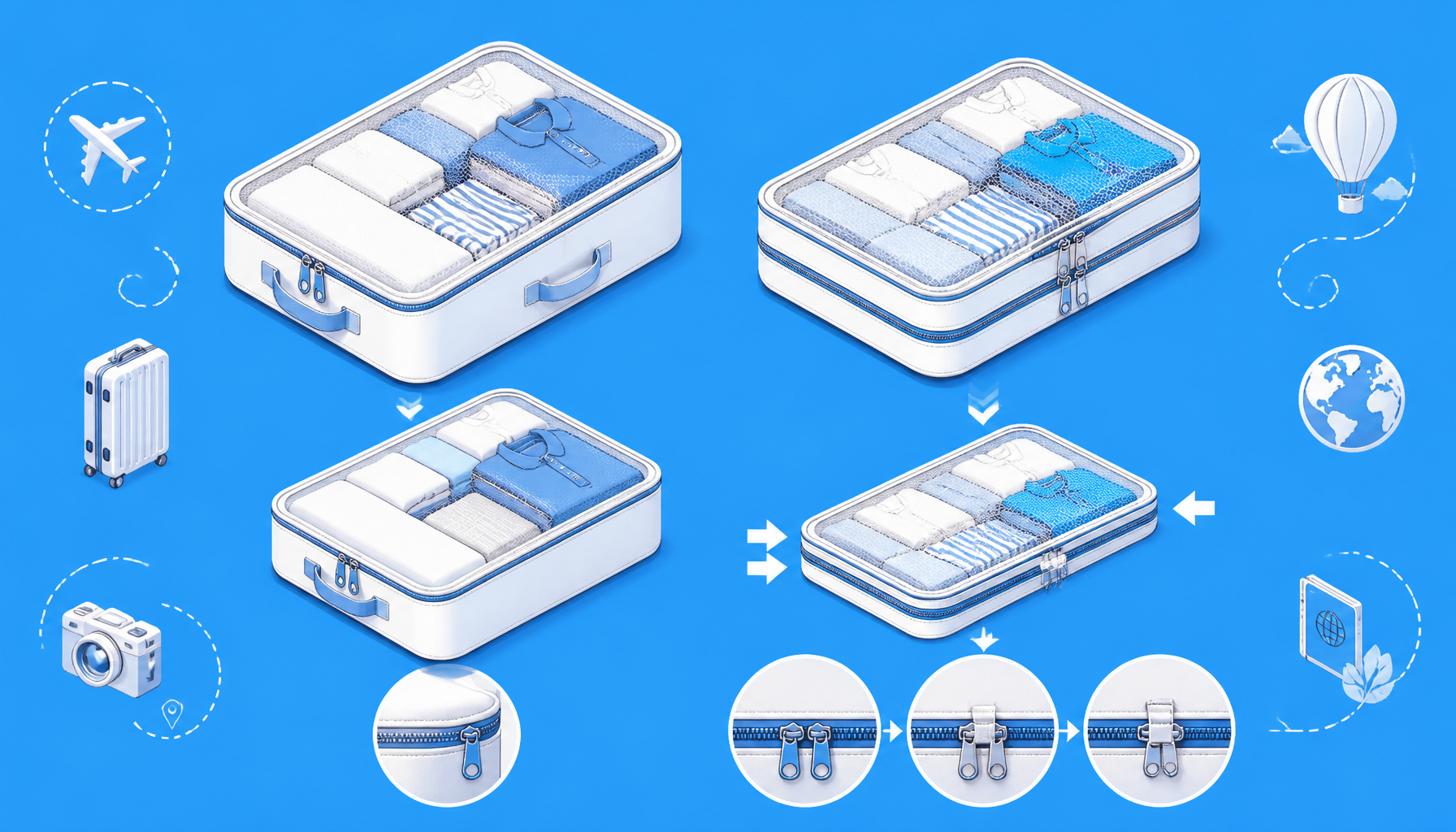
1. Overfilling the cubes. If you're fighting the zipper, you've gone too far. Overstuffed cubes lose their shape, don't stack well, and compression cubes can't compress effectively when jammed to capacity.
2. Buying a giant matching set. Most travelers only use 3-4 cubes regularly. That 8-piece set with four identical medium cubes looks great in photos but creates redundancy. Buy what you'll actually use.
3. Ignoring size coordination. Different-sized cubes that don't tile together in your suitcase create wasted gaps. Look for sets designed to fit standard carry-on dimensions.
4. Mixing categories. One cube, one category. Throwing socks, a swimsuit, and a dress shirt into the same cube means you're digging through everything every morning. That's the exact problem cubes are supposed to solve.
5. Machine-washing compression cubes. Most compression packing cubes have "hand wash only" labels for a reason. Machine washing and especially dryer heat can warp the fabric and damage the waterproof lining. A quick hand rinse and air dry keeps them lasting for years.
Which Trips Benefit Most from Packing Cubes?
Packing cubes aren't equally useful for every trip. Here's where they make the biggest difference.
Carry-on only trips (1-2 weeks): This is where packing cubes earn their keep. Compression cubes can turn a tight carry-on into a surprisingly spacious bag. You avoid checked bag fees, move faster through airports, and never wait at baggage claim.
Multi-destination itineraries: Bouncing between cities means constant packing and unpacking. Cubes let you pull out the right cube, grab what you need, and re-pack in minutes instead of playing suitcase Jenga every morning.
Family travel: Color-coded cubes for each family member eliminate the "whose shirt is this?" problem entirely. Pack each person's clothes in their designated color and hand the whole cube to them at the hotel.
Business trips: Keep dress clothes in one cube, casual clothes in another. No wrinkled dress shirts buried under jeans.
Speaking of saving on flights — Autopilot watches your booked fare and automatically gets you money back if the price drops after you buy. Worth checking before your next trip.
The Verdict: Should You Buy Packing Cubes?
For most travelers, yes. Packing cubes are a relatively inexpensive investment ($15-45 for a quality set) that fundamentally improves how you pack.
They won't double your luggage capacity. They won't replace smart packing decisions. But they will make packing faster, keep your bag organized throughout the trip, and make carry-on-only travel significantly more manageable.
If you travel more than two or three times a year — especially carry-on only — packing cubes are one of the best gear purchases you'll make. Get compression cubes if space is your priority. Get regular cubes if organization is all you need. Or do what seasoned travelers do and use both.
The real secret to better travel isn't just packing smarter — it's paying less for your flights. Autopilot monitors your booked flights and automatically gets you money back when fares drop. No effort required.
Frequently Asked Questions
Are packing cubes worth it?
Yes, packing cubes are worth it for most travelers. They won't magically create extra space in your bag, but they keep everything organized, speed up packing and unpacking, and make carry-on-only travel far less stressful. Most frequent travelers consider them essential gear.
Do packing cubes save space?
Regular packing cubes save a modest 10-15% of space by eliminating air gaps between items. Compression packing cubes with dual-zipper systems can save 20-50% of space by squeezing out excess air. The real benefit is organization, not compression.
What is the difference between packing cubes and compression packing cubes?
Regular packing cubes have one zipper and organize your clothes into neat compartments. Compression packing cubes have two zippers — one to close the cube and a second to compress the contents down. Compression cubes save more space but weigh slightly more and may wrinkle clothes.
Are packing cubes better than rolling clothes?
They serve different purposes. Rolling is better for maximizing raw space. Packing cubes are better for organization and quick access. The best approach is combining both — roll your clothes, then place them in packing cubes for the best of both worlds.
How many packing cubes do I need?
Most travelers need 3-5 packing cubes for a carry-on trip. A typical setup is one small cube for underwear and socks, one medium for t-shirts and tops, one large for pants and heavier layers, and optionally a slim cube for accessories or electronics.
Should I roll or fold clothes in packing cubes?
Rolling is generally better inside packing cubes because it reduces wrinkles and makes items easier to see. However, the fit-to-fold method — folding each item to match the exact shape of the cube — works best for compression cubes because it creates a flat, uniform stack that compresses evenly.
Do packing cubes work for carry-on only travel?
Packing cubes are arguably most useful for carry-on only travel. They help you maximize limited space, keep items accessible for security screening, and make it easy to find what you need without dumping your entire bag. Compression cubes are especially helpful for fitting a week's worth of clothes into an overhead bin bag.
When are packing cubes NOT worth it?
Packing cubes may not be worth it for overnight trips where you barely have enough items to fill one cube, for travelers who are already naturally organized with their luggage, or when your primary goal is cramming the absolute maximum amount of clothing into a bag — in that case, tightly rolled clothes without cubes will technically fit more.
Save More on Your Next Trip
Now that your packing game is sorted, make sure you're not overpaying for the flight itself. Autopilot monitors your booked flights and automatically claims the difference when prices drop. It takes about 30 seconds to set up and works with most major airlines.
Start saving on flights with Autopilot →
Disclaimer: Product recommendations are based on our research and testing. Autopilot helps you save on flights automatically — we monitor prices after you book and get you money back when fares drop.


