Airline Status Match: How to Switch Airlines Without Losing Your Elite Status (2026 Guide)
You spent the last year grinding for elite status. The upgrades, the priority boarding, the lounge access — you earned all of it.
And now you want to switch airlines.
Maybe your home airport got a new hub carrier. Maybe the routes changed. Maybe you're just tired of being treated like a number on an airline that used to treat you like a VIP.
Here's the good news: you don't have to start from scratch. Almost every major U.S. airline offers some form of status match or status challenge that lets you transfer your hard-earned elite tier to a new program — often within 24 hours.
Here's the better news: June 2026 is one of the best times to do it. United's registration deadline is June 30, and if you time your challenge completion right, you can lock in elite status through January 2028.
Let's break down exactly how every major airline's status match works right now, which ones are worth your time, and the timing strategy that can get you nearly two years of elite status from a single match.
Book Flights and Save Automatically with Autopilot
Status Match vs. Status Challenge: What's the Difference?
Before we get into airline-specific details, let's clear up the terminology — because airlines use these words differently and it matters.
A status match is when an airline gives you elite status outright, based on proof of your status with another carrier. You show them your Gold card, they give you their Gold card. Simple.
A status challenge is when an airline gives you temporary elite status and then says, "Prove you deserve it." You get a trial period (usually 90 to 120 days) and must hit specific flying or spending targets to keep the status long-term.
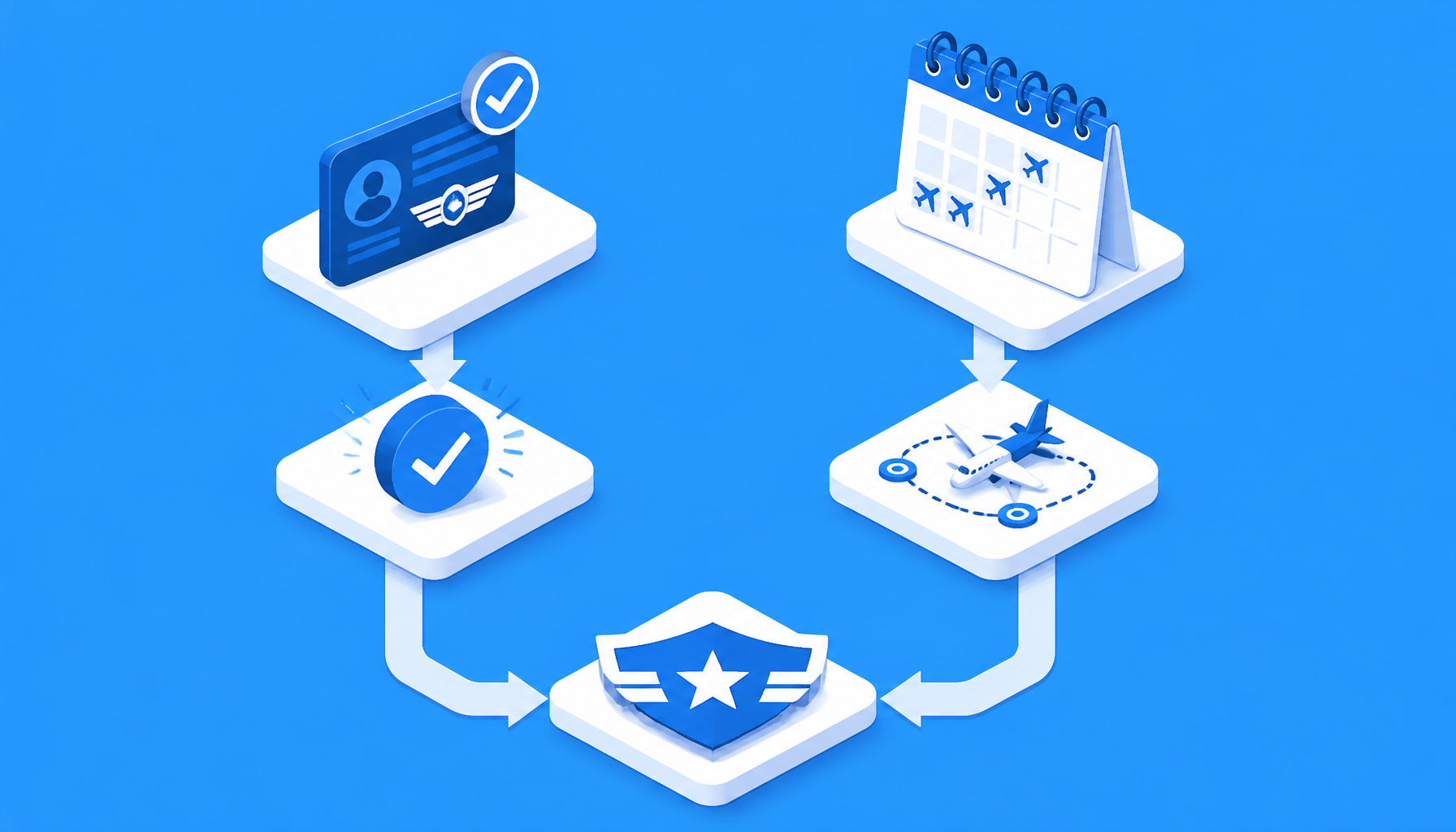
In practice, most airlines in 2026 offer a hybrid. You get instant temporary status (the match part) and then must meet reduced qualification requirements (the challenge part) to extend it. The good news? Challenge requirements are typically a fraction of what you'd need to earn status from scratch.
One critical rule applies almost everywhere: your status must be earned. Matched status, gifted status, credit card perks, and promotional tiers don't count. Airlines want proof you actually flew enough to earn your current rank.
Every Airline's Status Match Program in 2026
Here's where things stand right now with every major domestic carrier. Requirements, deadlines, and the fine print that actually matters.
Delta SkyMiles Medallion Status Match Challenge
Delta's program is straightforward. Submit proof of your earned elite status with a competing airline, and they'll match you to Silver, Gold, or Platinum Medallion. Diamond is off the table — they don't match to their top tier.
You get 90 days of complimentary status. To keep it, you need to earn a specific amount of Medallion Qualifying Dollars (MQDs) during that window:
- Silver Medallion: $1,250 MQDs
- Gold Medallion: $2,500 MQDs
- Platinum Medallion: $3,750 MQDs
Complete the challenge anytime in 2026 and your status extends through January 31, 2028. That's solid — Delta doesn't penalize you for applying early the way some other airlines do.
The catch: you can't have matched, earned through promotion, or received complimentary Medallion status at any point during 2023-2026. And you need at least one Delta flight above Basic Economy in the past three years.
United MileagePlus Premier Status Match Challenge
Deadline alert: registration closes June 30, 2026.
United's program is arguably the most generous — and time-sensitive. They'll match you up to Premier 1K, their highest tier. That's rare. Most airlines cap their matches well below the top.
You get 120 days to complete the challenge. The requirements combine Premier Qualifying Flights (PQF) and Premier Qualifying Points (PQP):
- Premier Silver: 5 PQF + 1,700 PQP
- Premier Gold: 10 PQF + 3,400 PQP
- Premier Platinum: 15 PQF + 5,000 PQP
- Premier 1K: 20 PQF + 7,500 PQP
Here's the critical timing play: finish the challenge before July 1, 2026, and your status lasts through January 2027. Finish on or after July 1, and it extends through January 2028. That's an entire extra year for strategic timing.
United accepts matches from Alaska, American, British Airways, Delta, Southwest, and Qantas. Matches are limited to once every three years.
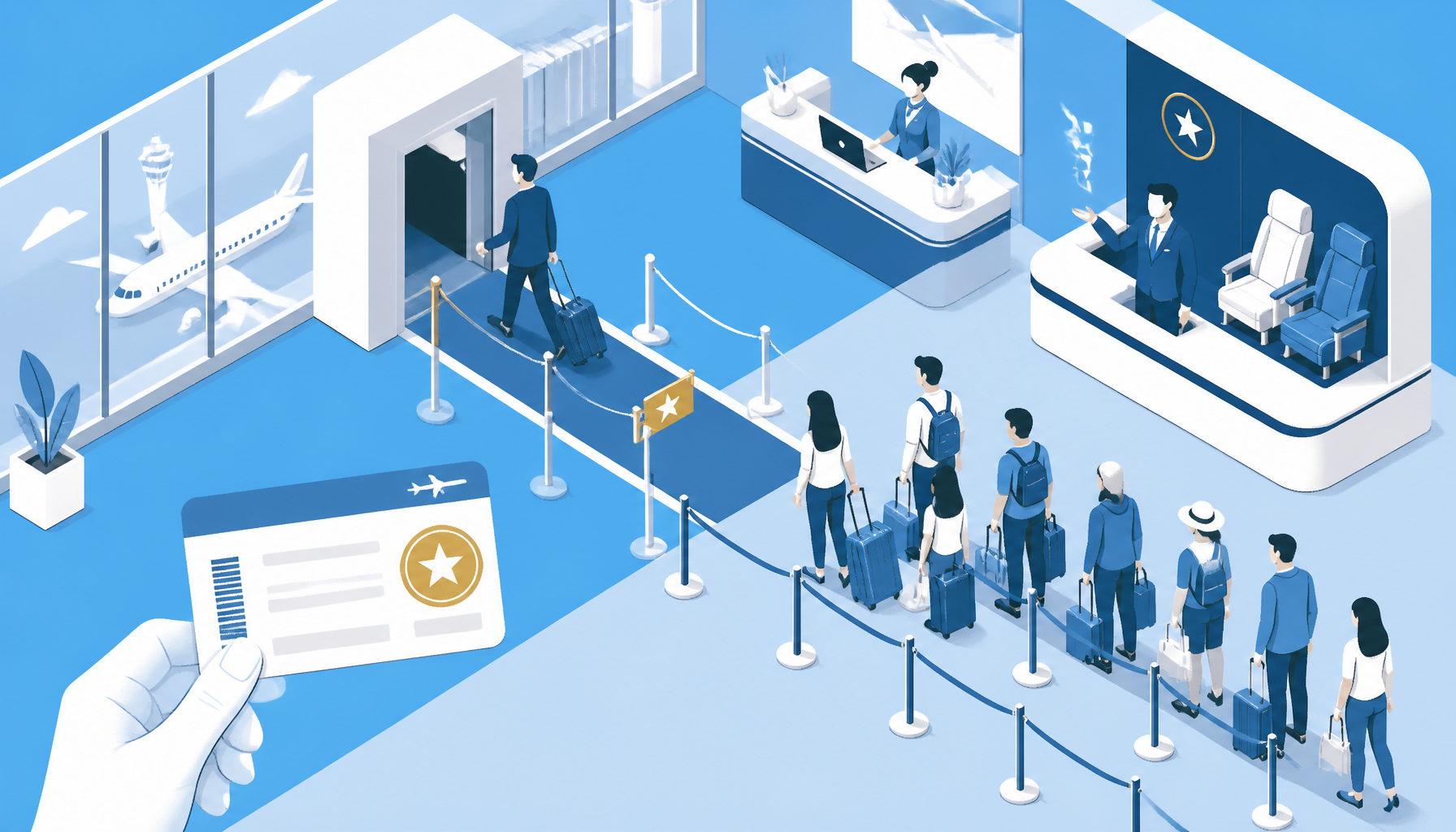
American AAdvantage Instant Status Pass
American takes a different approach. Their Instant Status Pass is a 12-month challenge split into three consecutive four-month phases.
You get instant status upon approval, then need to earn Loyalty Points each phase to keep it. The per-phase requirements:
- Gold: 13,000 Loyalty Points per phase
- Platinum: 25,000 Loyalty Points per phase
- Platinum Pro: 42,000 Loyalty Points per phase
- Executive Platinum: 67,000 Loyalty Points per phase
It's more demanding than Delta or United — you're essentially proving yourself over a full year. But if you're genuinely planning to fly American, the Gold and Platinum tiers are achievable for regular travelers.
American accepts matches from Delta, United, JetBlue, and Southwest. You can't have used the Instant Status Pass in the past two years.
Alaska Airlines Atmos Rewards Status Match
Alaska rebranded to Atmos Rewards, but the status match program still exists. They'll match you to Silver, Gold, or Platinum (no Titanium matches) for a 90-day trial.
The timing strategy here mirrors United's: apply between January and June, and extended status only lasts through December 2026. Apply between July and December, and it extends through December 2027.
Translation: if you can wait until July 1, you get up to 18 months of elite status instead of 6.
Big caveat: Alaska's match is once in a lifetime. That includes any previous match under the old Mileage Plan branding. Use this one wisely.
Southwest Airlines A-List Status Match
Southwest matches to A-List (not A-List Preferred) with a 120-day trial. Complete 3 paid round trips or 6 paid one-way flights within that window, and your status extends for 12 months.
The requirements are probably the simplest of any airline. No points thresholds, no spending minimums — just fly three round trips on Southwest.
Registration is open through December 30, 2026. You can't have received promotional A-List status in the past 12 months. A-List gets you priority boarding, free same-day standby, a 25% points bonus, and free checked bags for you and up to 8 companions.
JetBlue TrueBlue Match to Mosaic
JetBlue matches to Mosaic 1 or Mosaic 2 for a 3-month trial. To extend through the following calendar year, you need to earn 10 tiles within those 3 months.
Tiles come from JetBlue flights ($100 per tile) or JetBlue credit card spend ($1,000 per tile). So extending Mosaic 1 requires about $1,000 in JetBlue flights or $10,000 in card spend.
JetBlue accepts matches from Alaska, American, British Airways, Delta, and Southwest.
Airline Status Match Comparison Table
| Airline |
Highest Tier Available |
Trial Period |
Challenge Requirement |
Status Duration (If Completed) |
Deadline |
| Delta |
Platinum Medallion |
90 days |
$1,250-$3,750 MQDs |
Through Jan 2028 |
Dec 31, 2026 |
| United |
Premier 1K |
120 days |
5-20 PQF + 1,700-7,500 PQP |
Through Jan 2027 or Jan 2028* |
June 30, 2026 |
| American |
Executive Platinum |
4 months (Phase 1) |
13,000-67,000 LP per phase (x3) |
Through Mar 2028 |
Oct 31, 2026 |
| Alaska |
Atmos Platinum |
90 days |
Base points on AS/HA flights |
Through Dec 2026 or Dec 2027* |
Ongoing |
| Southwest |
A-List |
120 days |
3 round trips or 6 one-ways |
12 months from approval |
Dec 30, 2026 |
| JetBlue |
Mosaic 2 |
3 months |
10 tiles ($100/tile flying or $1K/tile card) |
Through end of next calendar year |
Ongoing |
*United: Jan 2028 if challenge completed after July 1. Alaska: Dec 2027 if match started after July 1.
Save on Your Challenge Flights with Autopilot
The July 1 Timing Strategy: How to Maximize Your Status Duration
This is the single most important piece of advice in this entire guide.
For United and Alaska, when you complete (not when you apply) your challenge determines how long your status lasts. And the difference is massive.
United: Complete the challenge before July 1, 2026 = status through January 2027 (about 7 months). Complete after July 1, 2026 = status through January 2028 (about 19 months). Same effort, wildly different payoff.
Alaska: Start the match January-June = extended status through December 2026. Start July-December = extended status through December 2027. That's up to 18 months versus 6.
Delta is the exception. No matter when you complete the challenge in 2026, your status extends through January 31, 2028. So there's no timing game with Delta — apply whenever you're ready.
The strategic move for United: apply now (before the June 30 deadline), but pace your qualifying flights so you hit the PQP and PQF targets on or after July 1. You'll have 120 days from approval, which gives you plenty of runway.
How to Apply for an Airline Status Match: Step by Step
The process is similar across all airlines, with minor variations.
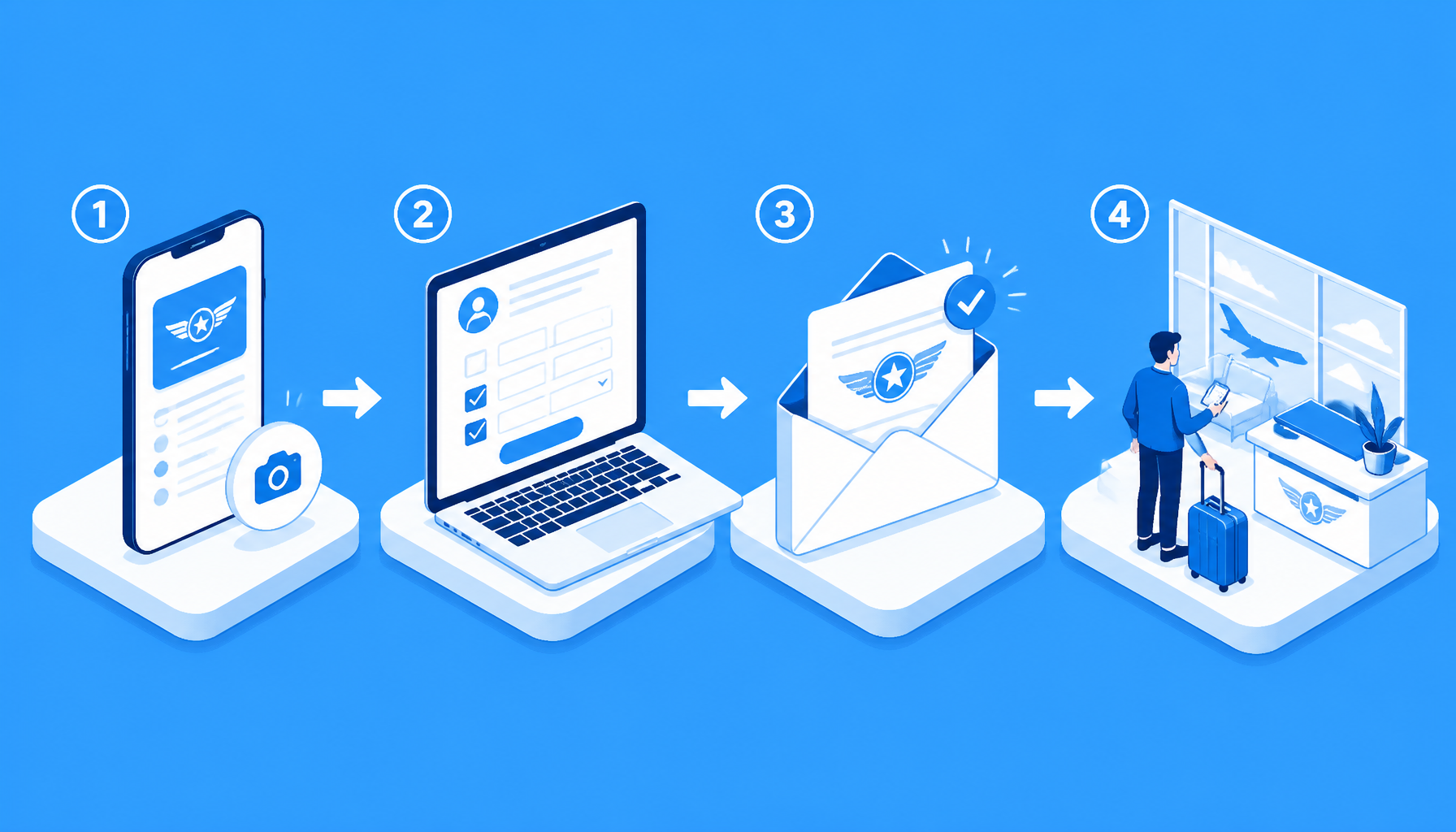
Step 1: Verify your current status is eligible. It must be earned through actual flying or spending — not matched, gifted, or from a credit card perk. Log into your current loyalty account and take a screenshot showing your name and elite tier.
Step 2: Choose your target airline. Consider which airline best serves your home airport and travel patterns. There's no point matching to an airline you won't fly enough to complete the challenge.
Step 3: Create an account. You'll need an active loyalty account with the airline you're matching to. Delta requires you to be enrolled for at least 30 days before applying.
Step 4: Submit your application. Each airline has a dedicated status match page. Upload your screenshot, select the tier you're matching from, and submit. Most approvals come within 24-48 hours. American can take up to four weeks.
Step 5: Start flying. Your challenge clock begins the moment you're approved (or after your first qualifying flight, depending on the airline). Book your flights strategically to hit the minimum requirements efficiently.
Step 6: Track your progress. Monitor your qualifying metrics in the airline's app or website. Don't wait until the last week — if you fall short, you lose the status with no extension.
Book Your Challenge Flights and Let Autopilot Watch for Price Drops
Pro Tips for a Successful Status Match
Stack your existing travel. Don't book extra flights just for the match. Look at trips you were already planning and route them through your new airline. Business travel counts, personal trips count — it all adds up.
Skip Basic Economy. Delta explicitly excludes Main Basic (Basic Economy) fares from match eligibility and challenge qualification. United and American have similar restrictions. Book at least Main Cabin or equivalent.
Use airline credit cards strategically. With American's Instant Status Pass, credit card spending can supplement your Loyalty Points. JetBlue's tile system counts card spend too. If you're close to the threshold, everyday spending on the right card can push you over.
Don't chain matches. Airlines check that your status was genuinely earned. If you match from Airline A to Airline B, you can't then use your Airline B matched status to match to Airline C. That second match will be rejected because the status wasn't earned.
Read the fine print on cooldowns. Delta's four-year blackout (2023-2026), United's three-year limit, American's two-year gap, and Alaska's once-in-a-lifetime restriction mean you need to be strategic about when you use your match opportunity.
Start Saving on Flights Today with Autopilot
Frequently Asked Questions
What is an airline status match?
An airline status match lets you transfer your elite frequent flyer status from one airline to another. You provide proof of your current status, and the new airline grants you equivalent elite benefits — usually for a trial period of 90 to 120 days. Most programs then require you to meet reduced flying targets to keep the status long-term.
What is the difference between a status match and a status challenge?
A status match grants you instant elite status with no flying requirements. A status challenge gives you temporary status but requires you to meet specific flying or spending goals within a set timeframe (typically 90-120 days) to keep it. Most airlines today offer a hybrid: instant temporary status plus a challenge to extend it.
Which airlines offer status matches in 2026?
Delta, United, American, Alaska, Southwest, and JetBlue all offer some form of status match or challenge in 2026. Delta offers a 90-day match challenge, United has a 120-day challenge with a June 30, 2026 registration deadline, American has the Instant Status Pass, Alaska offers a 90-day Atmos Rewards match, Southwest provides A-List matching, and JetBlue has Match to Mosaic.
Can I match hotel status to airline status?
Not directly through airline status match programs — they require proof of earned elite status with a competing airline. However, some hotel and airline programs have reciprocal partnerships that unlock cross-program benefits. The airline status match programs themselves are strictly airline-to-airline.
How long does airline status from a match last?
The initial matched status typically lasts 90 to 120 days. If you complete the challenge requirements, most airlines extend status significantly. Delta extends through January 2028. United extends through January 2027 or January 2028, depending on when you finish. American extends through March 2028 if you complete all three phases.
What is the best time of year to do an airline status match?
Mid-year is generally ideal. ForUnited and Alaska specifically, completing your challenge after July 1 extends your status through the entire following year — potentially giving you 18-19 months of elite status instead of 6-7. June is a great time to apply, as it gives you enough runway to complete the challenge in the second half of the year.
Can I status match more than once with the same airline?
Each airline has different cooldown periods. Delta excludes anyone who matched during 2023-2026. United limits matches to once every three years. American requires a two-year gap between Instant Status Pass enrollments. Alaska's match is explicitly once in a lifetime. Southwest requires 12 months since your last promotional status.
Does matched or promotional status qualify for matching to another airline?
No. Almost every airline requires that your status was earned through actual flying or revenue spending — not matched, gifted, promotional, or from a credit card perk. You'll need to provide proof of legitimately earned elite status. Screenshots of your frequent flyer profile are typically required.
The Bottom Line
Airline status matches are one of the best-kept secrets in frequent flying. If you've earned elite status anywhere, you have a currency that other airlines want to honor — because they want your future business.
Right now, the window is wide open. United's June 30 deadline is approaching fast, Delta's challenge extends status through 2028, and the July 1 timing trick can nearly double your status duration with United and Alaska.
The move: pick the airline that best fits your travel patterns, apply before the deadlines close, and time your challenge completion strategically. A little planning now means 18+ months of upgrades, priority boarding, and lounge access without re-qualifying from zero.
Book Smarter with Autopilot — We Watch for Price Drops So You Don't Have To
Disclaimer: Status match and challenge programs change frequently. Requirements, deadlines, and availability listed are accurate as of June 2026. Always verify directly with each airline. Autopilot helps you save on flights automatically — we monitor prices after you book and get you money back when fares drop.


