

Airline Boarding Groups Explained: How Every Major U.S. Carrier Boards (2026 Guide)
Airline Boarding Groups Explained: How Every Major U.S. Carrier Boards (2026 Guide)

Airline Boarding Groups Explained: How Every Major U.S. Carrier Boards (2026 Guide)
Few things in air travel cause more low-grade anxiety than standing at the gate, watching other passengers stream past you while you clutch a boarding pass that says "Group 7."
Boarding groups determine when you walk down that jetbridge. And when you board matters — it affects whether you get overhead bin space, how long you stand in that awkward aisle shuffle, and frankly, your entire airport mood.
Here's the thing: every airline does it differently. United has six groups. American has nine. Delta uses zones. Southwest just overhauled its entire system. It's genuinely confusing, and airlines keep changing the rules.
This guide breaks down exactly how boarding groups work at every major U.S. airline in 2026 — and how to move yourself up the list without paying a fortune.
The concept is simple. Airlines divide passengers into numbered (or lettered) groups and call them to board in order. Group 1 walks on first. The last group boards last and prays there's bin space left.
Your boarding group is determined by a combination of factors: your fare class, your elite status level, whether you hold a co-branded credit card, and sometimes just your seat location on the plane.
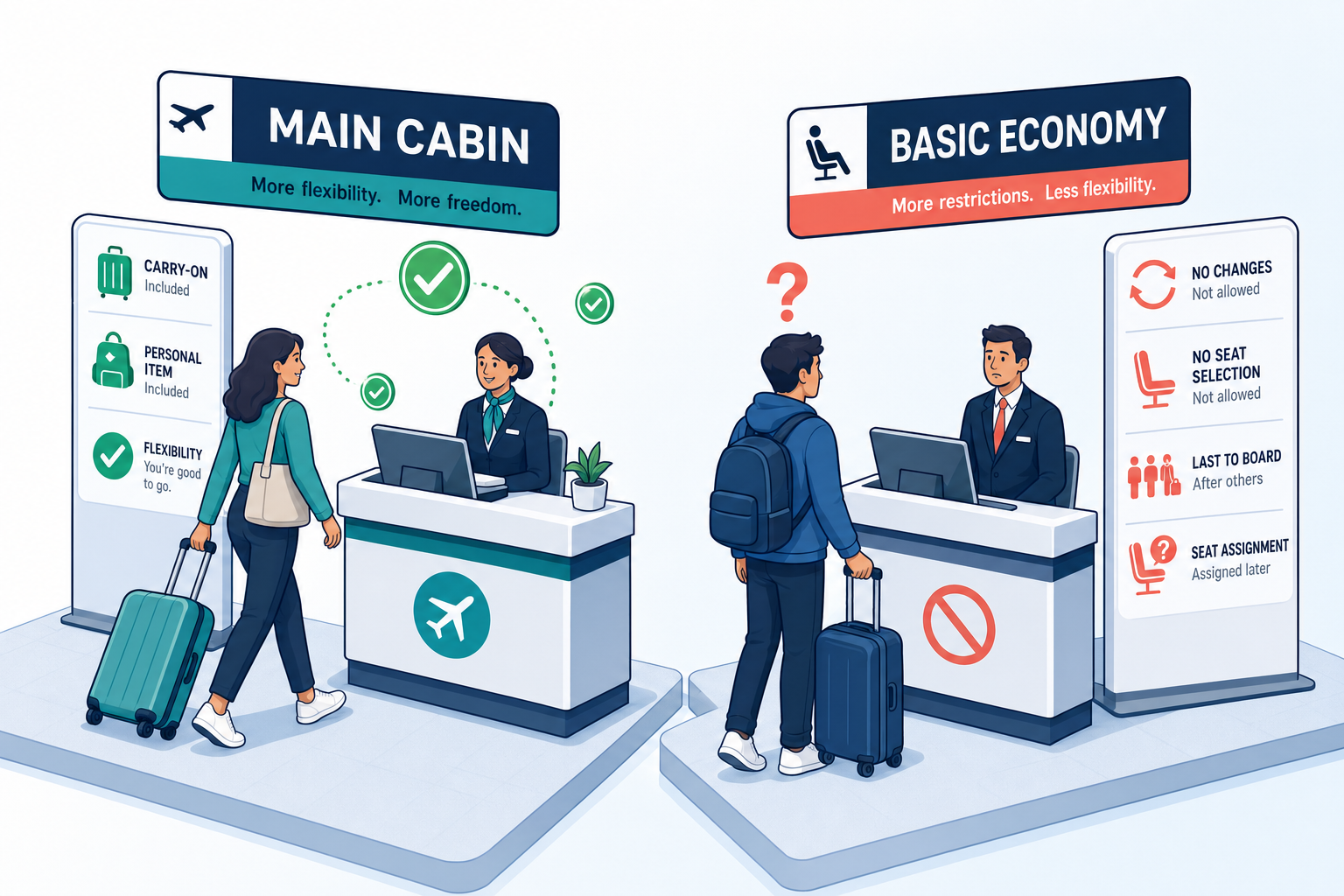
Premium cabin passengers (first class, business class) always board first. Then elite frequent flyers. Then credit card holders. Then everyone else, usually sorted by seat position or fare type. Basic economy passengers? Dead last, every single time.
If you booked a basic economy fare to save money — and tools like Autopilot can help you save even more by tracking price drops after you book — you'll typically board in the final group. That's the trade-off.
United uses six boarding groups plus pre-boarding, making it one of the more straightforward systems out there.
Pre-boarding covers passengers with disabilities, unaccompanied minors, active military, families with children under 2, and United Global Services and Premier 1K members — the airline's absolute top-tier elites.
Group 1 is for Polaris, first class, and business class passengers, along with Premier Platinum, Premier Gold, and Star Alliance Gold members.
Group 2 includes Premier Silver members, Star Alliance Silver members, anyone who purchased Premier Access or Priority Boarding, and Chase United credit card holders (Explorer, Club, Quest, and similar cards).
Groups 3 through 5 are economy passengers, now sorted by the WILMA system (introduced October 2025): window seats board in Group 3, middle seats in Group 4, aisle seats in Group 5. It's designed to reduce that awkward "climb over two people" situation.
Group 6 is basic economy and anyone without an assigned group. If you're here, the overhead bins are almost certainly full.
Delta switched to a numbered zone system with 8 zones (plus pre-boarding), replacing its older named-group system in early 2025.
Pre-boarding goes to passengers needing assistance, active military, and Delta 360 members (the invite-only top tier).
Zone 1: Delta One and first class passengers.
Zone 2: Diamond Medallion members and Delta Premium Select passengers.
Zone 3: Delta Comfort+ passengers.
Zone 4: Platinum and Gold Medallion members, plus SkyTeam Elite Plus partners.
Zone 5: Silver Medallion members and anyone with a Delta co-branded American Express card.
Zones 6-7: Standard Main Cabin passengers.
Zone 8: Basic economy. The back of the line.
The credit card perk here is notable. Any Delta Amex — even the no-annual-fee Delta SkyMiles Blue card — gets you into Zone 5, which is ahead of most economy passengers. That's a meaningful jump for zero effort.
American has the most groups of any major carrier: nine numbered groups plus pre-boarding. They expanded to this system on May 1, 2025.
Pre-boarding: ConciergeKey members, first and business class, passengers needing assistance, and families with children under 2.
Group 1: Executive Platinum members and active military.
Group 2: Platinum Pro and Oneworld Emerald members.
Group 3: Platinum status and Oneworld Sapphire members.
Group 4: Gold members, Oneworld Ruby, AirPass holders, Executive World Elite cardmembers, and priority boarding purchasers.
Group 5: Main Cabin Extra passengers, those earning 15,000+ loyalty points annually, and co-branded credit card holders.
Group 6: All other AAdvantage members.
Groups 7-8: General Main Cabin passengers.
Group 9: Basic economy.
Groups 1 through 4 board through the priority lane. Groups 5 through 9 use the main lane. Nine groups might sound excessive, but it does create clear tiers for elites and card holders.
Southwest completely overhauled its boarding process on January 27, 2026, ending its famous 53-year open seating system. Gone are the A/B/C groups with numbered positions. Gone is the "cattle call" sprint to get a good seat.
The new system uses 8 numbered groups with assigned seating. You now pick your seat at booking from three categories: Extra Legroom, Preferred, and Standard. Your boarding group is printed on your pass.
This is a massive change for Southwest loyalists. EarlyBird Check-In — which used to guarantee an early boarding position — now works differently under the assigned seating model. Southwest credit card holders get at least Group 5 boarding.
If you're still adjusting to the new system, you're not alone. It's the biggest shift in Southwest's history.
JetBlue just rolled out its own overhaul on April 29, 2026, moving from branded letter groups to 8 numbered groups.
Group 1: Mosaic 3 and 4 members, Mint passengers.
Group 2: Mosaic 1 and 2 members, Even More Space customers.
Group 3: JetBlue Premier and Business card holders, Blue Extra fares, and TrueBlue "Perks You Pick" early boarding selectors.
Groups 4-8: General boarding, sorted largely by seat location.
The simplification is welcome. JetBlue's old system had 11 groups with a confusing mix of letters and branded names. Numbers are better.
Alaska uses 5 lettered groups (A through E) plus pre-boarding and a separate first class priority boarding call.
Group A: Atmos Rewards Platinum, Gold, and Million Miler members, Oneworld Emerald and Sapphire.
Group B: Atmos Rewards Silver, Oneworld Ruby, and Premium class seat holders.
Group C: Co-branded credit card holders (Atmos Ascent and Summit Visa cards) and up to 6 companions.
Group D: Standard seating, rear of aircraft.
Group E: Saver fare passengers.
Alaska's system is clean and predictable. The credit card perk is especially generous — Group C boarding for you and six companions just for buying the ticket with your card.
| Airline | Total Groups | System Type | How Group Is Assigned | Credit Card Boarding | Basic Economy Group |
|---|---|---|---|---|---|
| United | 6 + pre-board | Numbered (WILMA for 3-5) | Fare, status, seat position | Group 2 | Group 6 |
| Delta | 8 zones + pre-board | Numbered zones | Fare, status, credit card | Zone 5 | Zone 8 |
| American | 9 + pre-board | Numbered | Fare, status, loyalty points | Group 4-5 | Group 9 |
| Southwest | 8 | Numbered (assigned seats) | Fare category, status | Group 5 | N/A (no basic economy) |
| JetBlue | 8 | Numbered | Fare, Mosaic status, card | Group 3 | Group 8 |
| Alaska | 5 + pre-board | Lettered (A-E) | Fare, status, credit card | Group C | Group E |
| Spirit | 5 + pre-board | Numbered | Fare, status, add-ons | Group 2 | Group 4-5 |
| Frontier | 7 + pre-board | Numbered | Fare bundle, status | Group 4 | Group 6-7 |
You don't have to be a road warrior flying 100,000 miles a year to board early. Here are the most practical ways to move up.
This is the single easiest hack. Almost every airline offers earlier boarding to holders of their co-branded credit card — even the entry-level versions. A Delta Blue Amex gets you Zone 5. A Chase United Explorer gets you Group 2. You don't need elite status. You just need the card.
Elite frequent flyers board near the front of the line on every airline. Even the lowest tier (Silver, Gold, etc.) typically gets you into the top half of boarding groups. Higher tiers board right after premium cabins.
Main Cabin Extra on American, Comfort+ on Delta, and Economy Plus on United all come with earlier boarding. Sometimes the upgrade is only $30-50 per segment — worth it if overhead bin space matters to you.
Most airlines sell early boarding as a standalone add-on, usually $15-40 per flight. On Spirit and Frontier, "Shortcut Boarding" or similar products can jump you several groups forward.
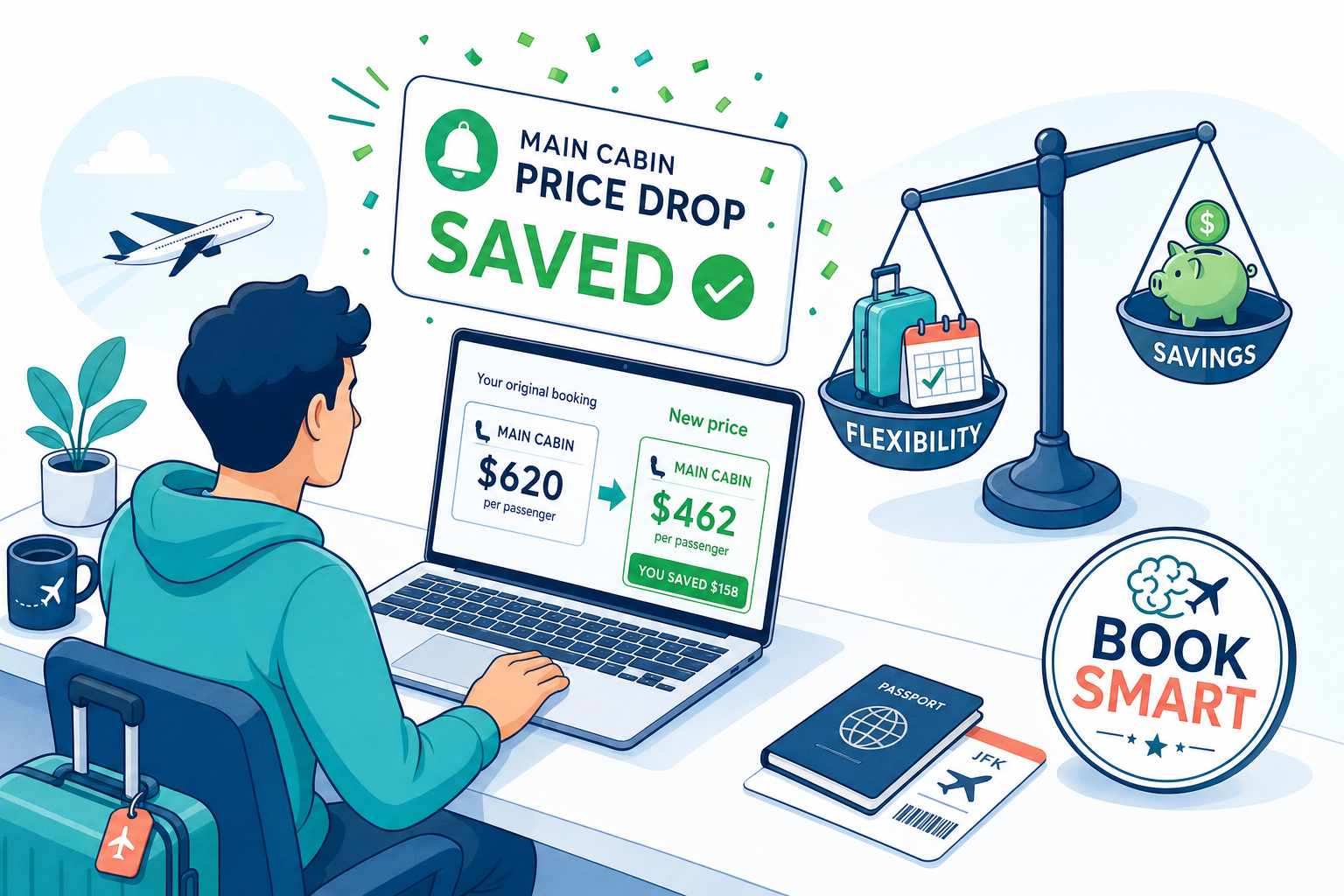
Here's a move most people miss: book a higher fare class that includes better boarding, then use a service like Autopilot to monitor your flight for price drops. If the price drops after you book, Autopilot can help you capture those savings — giving you the better boarding position and the lower price. Best of both worlds.
Stuck in the last group? It's not the end of the world. A few survival strategies:
Gate-check your carry-on for free. When bins fill up, airlines will gate-check bags at no charge. Your bag goes under the plane and you get it back at the jetbridge. No baggage carousel wait.
Use a personal item strategically. Pack everything essential in your under-seat personal item. If your carry-on gets gate-checked, you still have your laptop, headphones, and snacks at your feet.
Check in exactly at the 24-hour mark. On airlines where check-in time affects your group, set an alarm and check in the second the window opens.
Don't stress overhead bins. Seriously. Gate-checking is free and often faster than wrestling your bag into a packed bin while 50 people stare at you from their seats.
United has 6 numbered boarding groups plus a pre-boarding call. Groups 3 through 5 now use the WILMA system (window, middle, aisle) introduced in October 2025 to speed up the process.
Southwest switched to assigned seating and 8 numbered boarding groups on January 27, 2026. You now pick your seat at booking and board by group number — the old A/B/C open seating system is gone.
Delta uses 8 numbered zones plus pre-boarding. Zone 1 is for Delta One and first class. Zone 8 is for basic economy. Delta co-branded Amex card holders board in Zone 5 regardless of fare class.
Yes, on almost every airline. Co-branded airline credit cards typically move you up 2-4 groups. For example, any Chase United card gets you Group 2, and any Delta Amex gets you Zone 5. It's the easiest boarding upgrade available.
Your boarding group is determined by a combination of your fare class, elite frequent flyer status, co-branded credit card ownership, and (on some airlines) your seat location. Premium cabins always board first, basic economy always boards last.
On most airlines, no — your seat is assigned regardless of when you board. The main advantage of an early boarding group is guaranteed overhead bin space. Southwest was the exception with open seating, but even they switched to assigned seats in 2026.
Your boarding group appears on your boarding pass after you check in, typically 24 hours before departure. You can view it in the airline's app or on your printed or digital boarding pass. If you have elite status or a credit card that grants priority boarding, your group is assigned automatically.
It depends on your situation. If you have a full-size carry-on and no checked bag, early boarding guarantees bin space — and that's worth $15-40 to many travelers. If you're traveling light with just a personal item, save the money. The seat is the same either way.
Boarding groups are one of those things in travel that seem trivial until you're standing in Group 8 watching the gate agent announce that all overhead bins are full.
The good news: you have more control than you think. A co-branded credit card alone can jump you several groups forward on any airline. Elite status takes it further. And sometimes just booking a slightly better fare — especially when you can use Autopilot to track price drops and recapture any savings — gives you the best of both worlds.
Know your airline's system, play the game, and you'll never have to gate-check a bag again. Unless you want to.
Disclaimer: Boarding group policies are subject to change. The information in this article is accurate as of May 2026 but airlines frequently update their procedures. Always check your airline's official website for the most current boarding process before your trip. This article is for informational purposes only and does not constitute travel advice.

